
The short answer
What to know first.
Golden monkeys are a strikingly coloured monkey of the Virunga volcanoes' bamboo belt, found nowhere else, living in large, fast, sociable troops that can number in the dozens. They are tracked on two mornings only: in Volcanoes National Park in Rwanda and in Mgahinga Gorilla National Park in Uganda, each under its own authority and permit. The trek is gentler than a gorilla morning, the troops move quickly and low through the bamboo, and the minimum age sits below the gorilla rule, with the current figure confirmed at booking. On a Virunga route Sail places golden monkeys as a morning of their own, often the day before or after the gorilla trek.
At a glance
The planning brief.
What they are
A bamboo-belt monkey of the Virunga volcanoes, living in large, fast, sociable troops found nowhere else.
Where to see them
Volcanoes National Park in Rwanda and Mgahinga in Uganda, each with its own permit and morning.
Ages and permits
Minimum ages sit lower than the gorilla rule and move; the current figure is confirmed at booking.
Sail verifies
Permit availability alongside the gorilla date, and which park the route genuinely serves.
01
The species, plainly
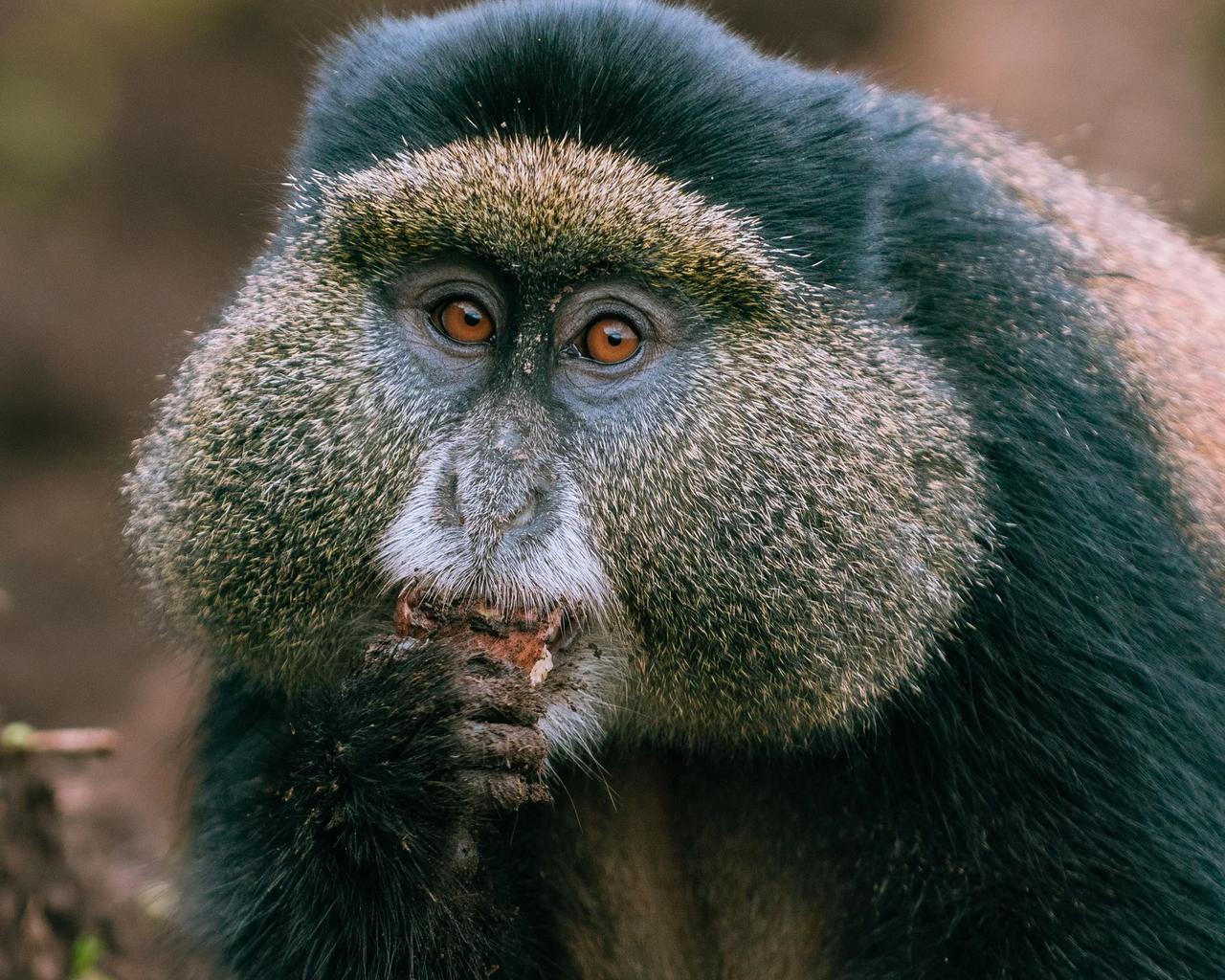
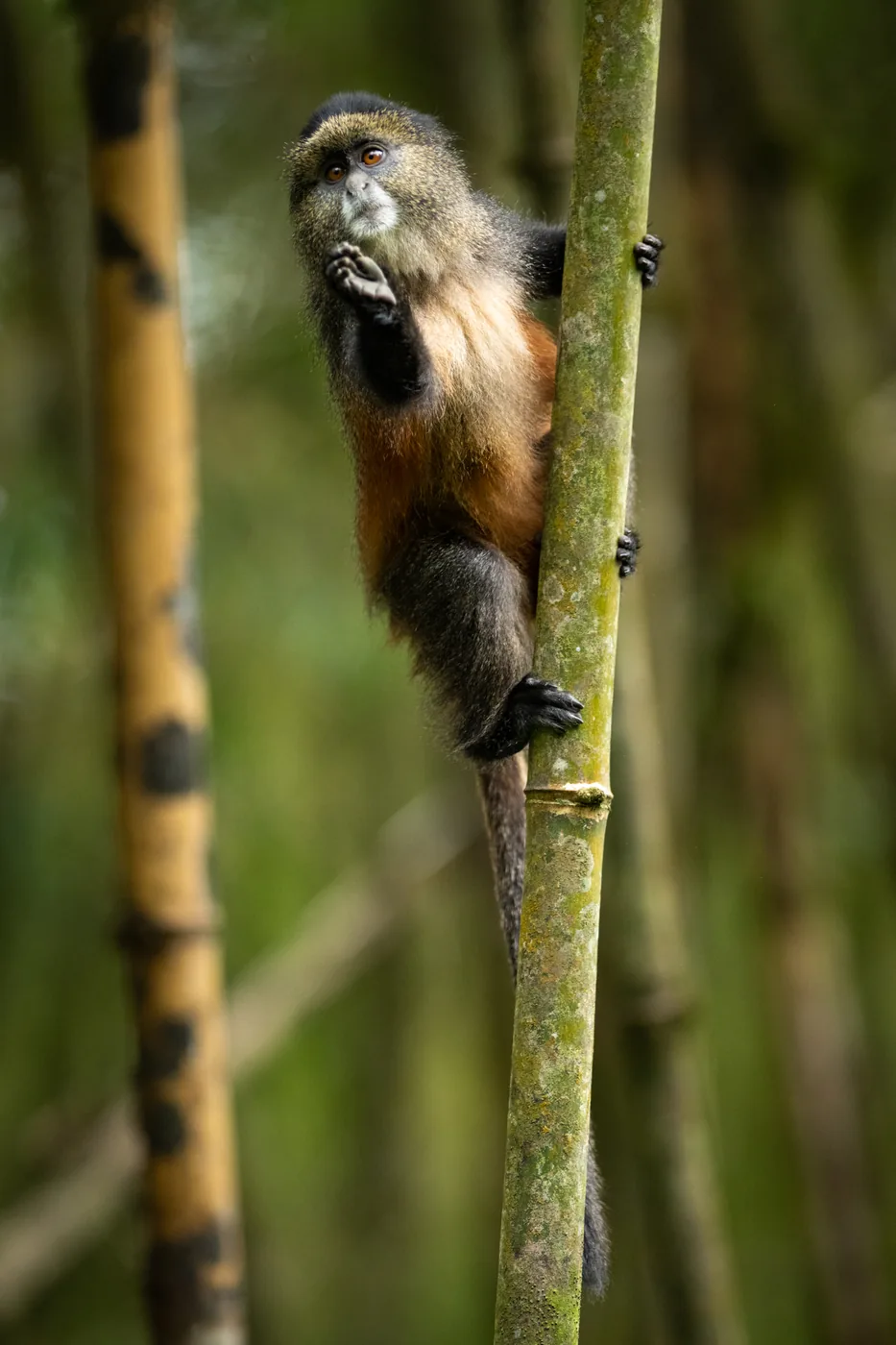
A golden monkey is instantly readable: a russet-gold back and flanks against slate limbs, a curious face, and constant motion. They live only in the bamboo belt of the Virunga volcanoes, which is why the two parks that share that landscape, Volcanoes in Rwanda and Mgahinga in Uganda, hold the only tracking mornings in the world.
Troops are large and busy, feeding through bamboo at speed, dropping to the ground and vanishing back into the canopy. Where a gorilla family holds court, a golden monkey troop sweeps past; the photography is faster, and the laughter usually louder.
02
How the morning runs
The shape mirrors a gorilla trek in miniature: a morning briefing, rangers who know where the troop slept, and a walk through farmland edge into bamboo forest that is usually shorter and gentler than a gorilla approach. Once with the troop, the visit is regulated in the same disciplined way.
Because the troops keep moving, the hour is spent walking with them rather than sitting among them. Sensible shoes and the same layered kit as a gorilla morning serve well, with the effort dialled down a notch.
03
Rwanda or Uganda for it
The honest answer is: whichever country already holds your gorilla chapter. Volcanoes pairs golden monkeys with a Kigali-based Rwanda journey; Mgahinga pairs them with Uganda's southwest and sits naturally beside Bwindi's southern sectors. Neither morning is superior; they are the same species in the same massif under two flags.
Permits are issued by RDB in Rwanda and UWA in Uganda, at tariffs well below the gorilla fee, with availability that is rarely the constraint gorillas are. As ever, current figures and conditions are confirmed at booking rather than quoted from memory.
04
Who the morning serves
Families first: the minimum age sits below the gorilla rule, which makes golden monkeys the classic designed morning for travellers the gorilla trek excludes, and a genuine highlight rather than a consolation prize. The current minimum for the actual date is confirmed at booking.
Photographers and second-visit travellers follow close behind. The troop's speed rewards a fast shutter and a sense of humour, and for guests who have already sat with the gorillas, the bamboo belt shows the same mountains in an entirely different mood.
Questions travellers ask
Useful answers, before you decide.
Are golden monkeys guaranteed?
No wildlife is. The troops are tracked daily and sightings are the strong norm, but the forest writes each morning; no desk should promise otherwise.
Can children track golden monkeys?
The minimum age sits below the gorilla rule and is set by each park authority; the current figure for the actual date is confirmed at booking, and the morning suits active children well.
How hard is the walk?
Usually gentler and shorter than a gorilla trek: farmland edge, then bamboo. Reasonable fitness and decent boots are enough for most travellers.