
The short answer
What to know first.
Hire a porter. In both Uganda and Rwanda, porters are part of the operated morning: they carry the daypack, offer a steady hand, and keep value in the community that hosts the trail. Walking sticks are commonly provided or permitted; confirm locally at briefing. A chair or stretcher is not a guaranteed product in both parks. Ask early, and let Sail confirm whether that arrangement exists for your sector, your date and your mobility note. No prices are published here.
At a glance
The planning brief.
Plan the porter in
Do not treat porter hire as an afterthought at the trailhead. Tell Sail you want one, or one per walker, before the morning.
Daypack only
Bring what you need. The porter's work is the bag and your balance, not a travelling wardrobe.
Sticks, confirmed locally
Park teams commonly provide or permit suitable support. Follow the briefing you are given that day.
Chairs are a request
Where a carrying chair or stretcher is used, it is arranged in advance. It is not standing inventory in every park.
01
What a porter actually does
A gorilla morning begins at a briefing. Then the walk, roots, mud, steep pitches. A porter takes the daypack so your hands are free. On the worst ground they offer an arm. They do not carry you unless a separate, pre-agreed chair arrangement is in place.
Hiring a porter is also a direct local wage. Sail briefs it as part of a well-run morning, not as a sign that you are unfit. A porter makes uneven ground more manageable. It does not convert a sector into a light walk, and it does not guarantee a sighting. Tell Sail about knees, balance and breathing. That note shapes pace and tells us whether to ask, early, about additional support. The lodge remains locked to the permit place.
02
Walking sticks, gloves, and what you carry
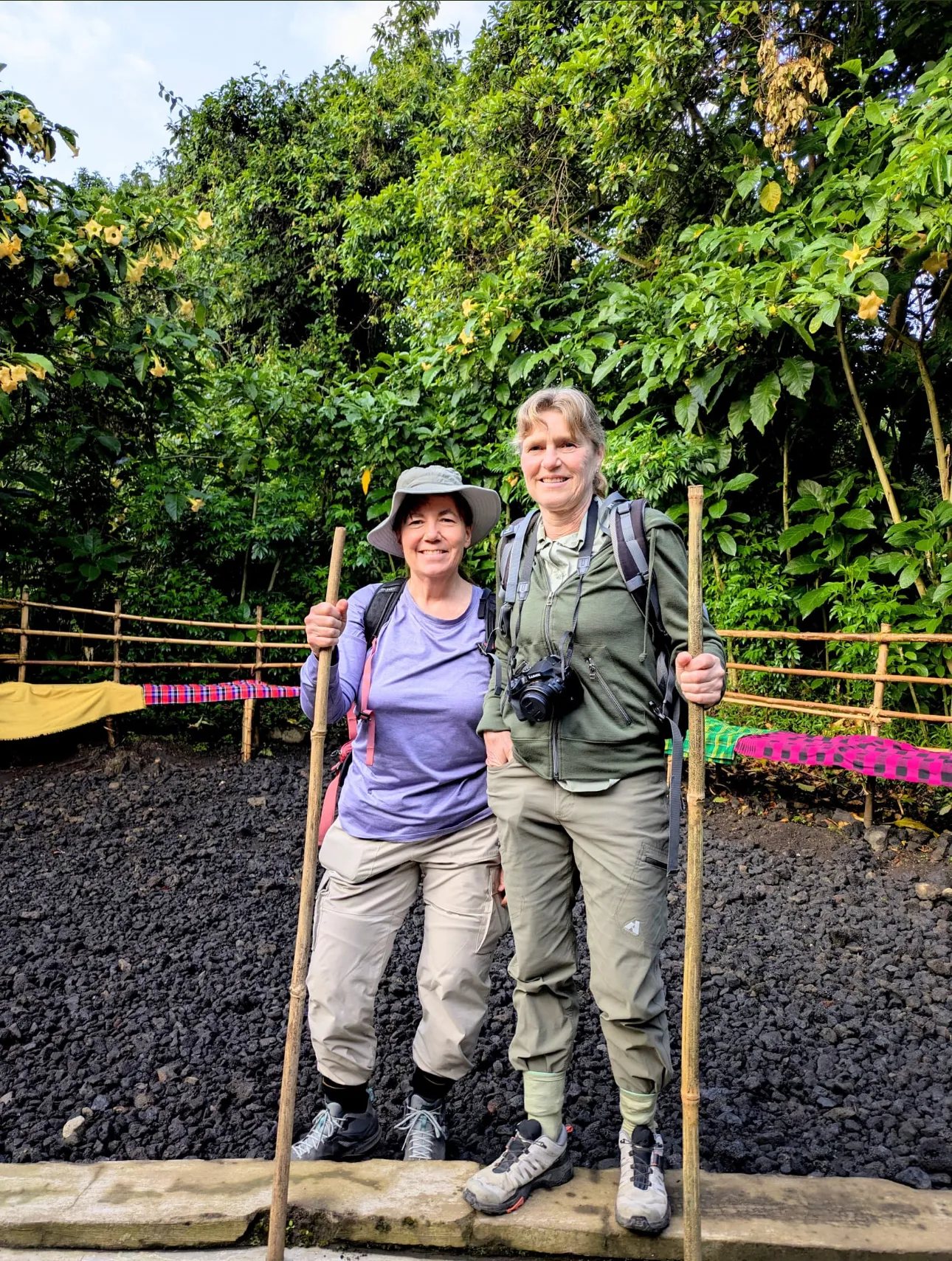
Park teams commonly provide or permit suitable walking support. Confirm that practice at the briefing. Gloves help when you take vegetation. Broken-in waterproof boots matter; new boots are a poor experiment on trek morning.
Carry water, rain protection, and a camera you can operate without delaying the group. The live clothing note is on the what-to-expect journal. A porter does not create an age exception.
03
Chairs and stretchers: request, do not assume
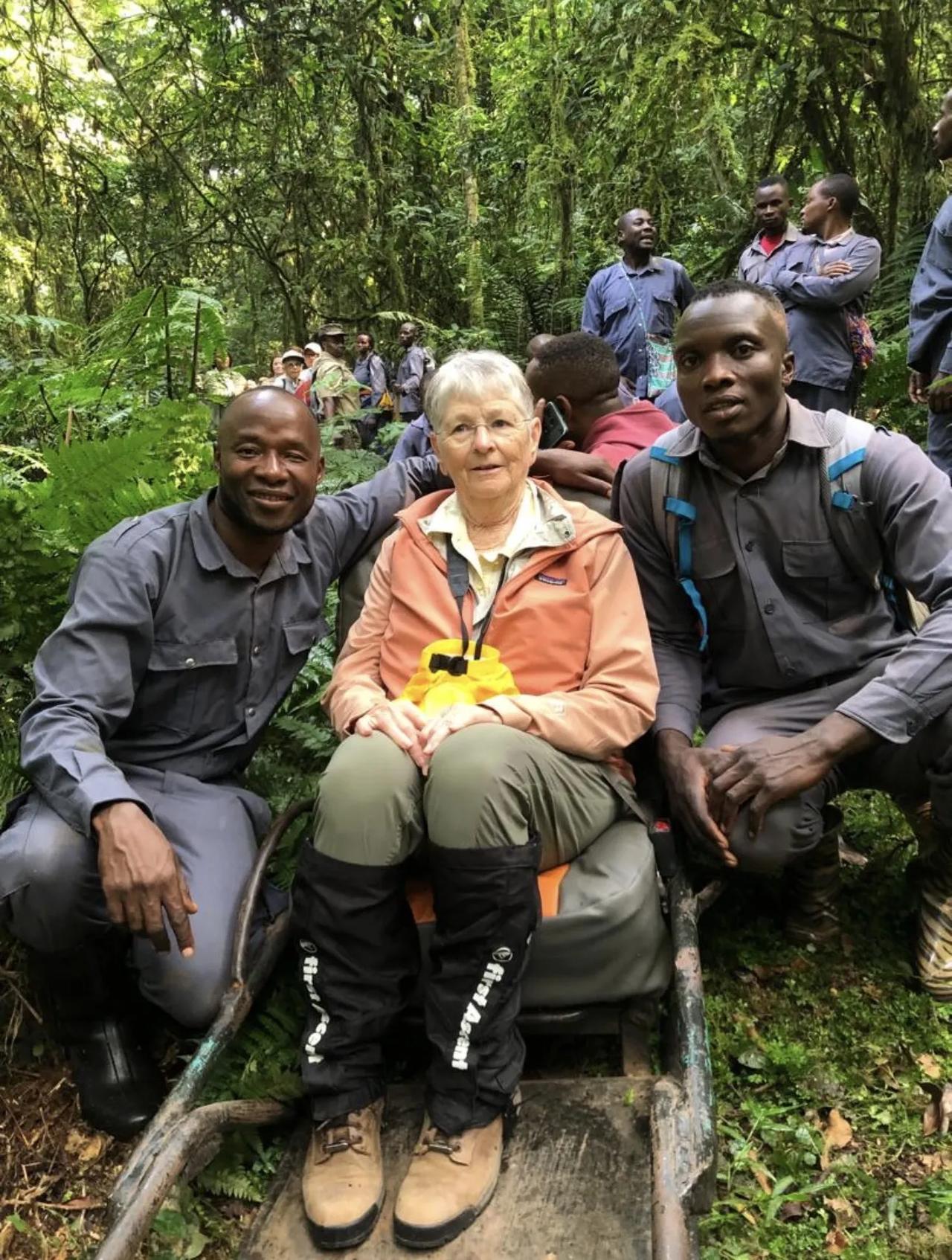
Some trailheads, on some dates, can arrange a carrying chair or a stretcher. That arrangement is a team of people. It has to be asked for in advance, matched to the park that holds your permit, and confirmed at booking. Sail will not write it in as a standing inclusion for both countries.
Do not invent a price, and do not treat a photograph as proof that your sector offers one. Where it is available, it still depends on terrain and park permission that morning. It is not a reason to conceal illness. Gorillas are vulnerable to human respiratory disease.
04
Say so before the permit is paid
If mobility is the central fact of the file, say so before permits are paid. Unpaid UWA holds are gone. Journey terms are distinct from permit terms.
05
How Sail runs the morning
Sail's operating note is simple: briefing time, permit place, porter count, any pre-agreed additional support. The guest carries a passport plus whatever rangers currently require; UWA is moving toward electronic issue.
Keep the afternoon uncommitted. A porter does not remove the need for recovery, or for three nights as the unhurried starting point in Bwindi. Put porter intent and any chair request in the first brief, beside ages and sector.
Questions travellers ask
Useful answers, before you decide.
Should I hire a porter?
Yes, plan on it. A porter carries the daypack and offers a steady hand on slippery ground. Porters are part of the operated morning in both Uganda and Rwanda.
Can I use a walking stick?
Park teams commonly provide or permit suitable support. Confirm the current local practice at briefing; porter assistance remains the more useful help on mud.
Can I book a chair or stretcher in both countries?
Not as a standing, guaranteed product. Chair or stretcher arrangements exist in some places. They must be requested in advance and confirmed at booking for that park and date.
What does a porter cost?
Confirm the live arrangement at booking. This page does not publish a porter tariff.