
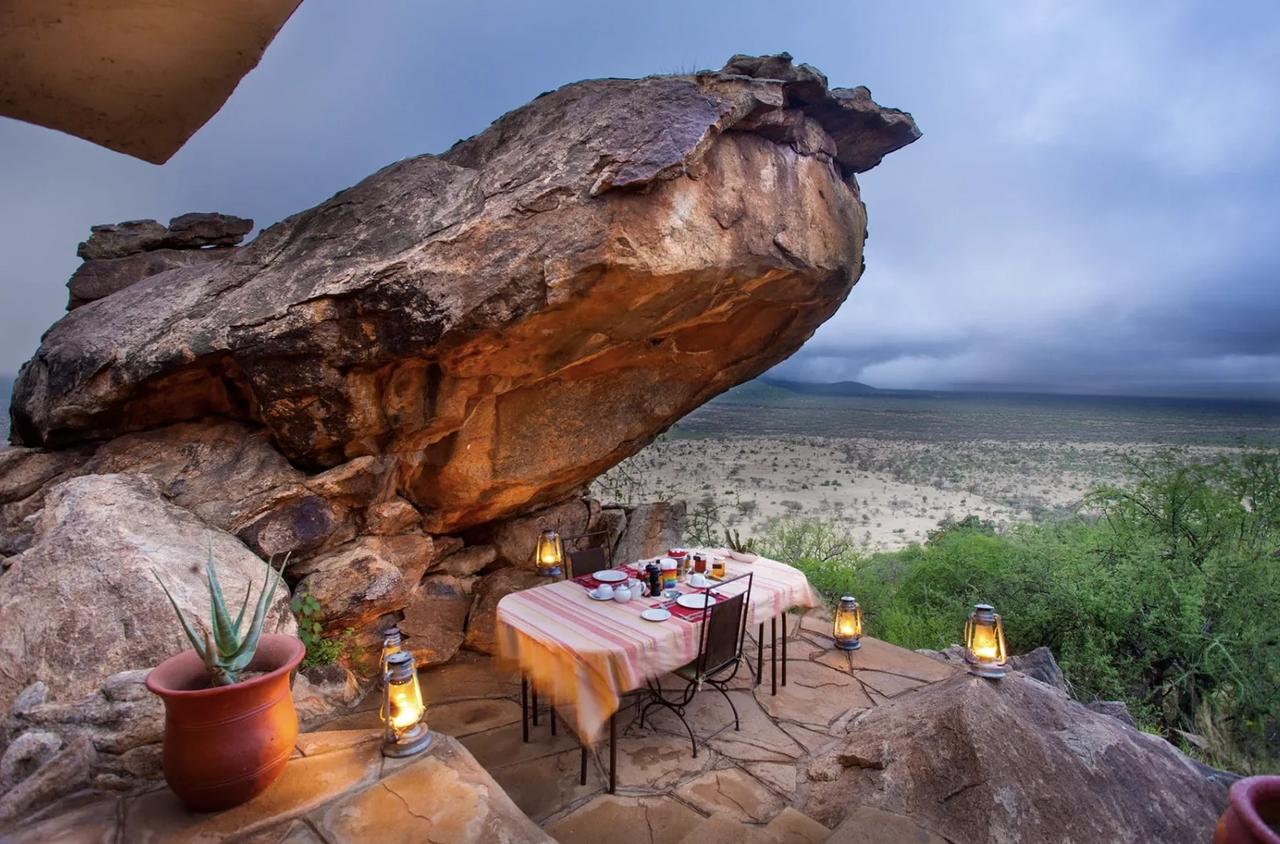
The short answer
What to know first.
North of Mount Kenya the country dries, reddens and changes its cast, and Samburu is where that change becomes a safari. The reserve and its neighbours across the Ewaso Nyiro river, Buffalo Springs and Shaba, hold species the famous southern parks simply do not: the Special Five of the north, Grevy's zebra with its fine pinstripes and round ears, reticulated giraffe in its crisp geometric coat, the long-necked gerenuk browsing upright on its hind legs, beisa oryx, and the blue-legged Somali ostrich, alongside elephant herds that walk the riverbanks daily, leopard in the riverine forest and lion on the open ground. The river runs the day: in semi-arid country the Ewaso Nyiro's shade and water pull everything toward it, so game viewing follows the water's rhythm rather than a grid of plains. Culture runs close to the surface too, the Samburu people's presence shaping the community conservancies that ring the reserve and the north beyond, where the Mathews Range and Namunyak's community ground carry the sanctuary story of Reteti, the community-owned elephant orphanage. Where it fits: as a fly-in chapter from Nairobi's Wilson, as the road continuation of a Laikipia file, or as the returning traveller's north after the Mara. Entry runs on the county reserve's published fee, currently 85 US dollars per person per twenty-four hours, with community conservancies pricing their own ground, all restated on the quote and confirmed at booking. Dry months concentrate the wildlife at the river; the green flush after rains scatters it and paints the country. The honest register is the one this journal uses everywhere: the north's specials are resident and likely, promised on no particular drive.
At a glance
The planning brief.
The Special Five
Grevy's zebra, reticulated giraffe, gerenuk, beisa oryx and Somali ostrich: dry-country species the south does not hold.
The river runs the day
The Ewaso Nyiro concentrates elephant, cats and everything else in semi-arid country: game viewing by the water's rhythm.
Where it fits
After Laikipia by road or as its own fly-in chapter from Wilson; the returning traveller's north.
Sail verifies
Current reserve fees, community conservancy access in the north and seasonal river conditions for your dates.
01
What the north holds that the south does not
Kenya's savannah splits along a line most first safaris never cross. South of it, the Mara's black-cotton grassland and its familiar cast; north of it, red soil, doum palms, acacia thorn, and a suite of dry-country species evolved for exactly that. The Special Five are the headline, Grevy's zebra among the rarest large mammals on the continent and this ecosystem its stronghold, reticulated giraffe unmistakable at a hundred paces, gerenuk feeding standing tall on hind legs like something invented, beisa oryx in heraldic profile, Somali ostrich in its blue-grey livery.
The supporting cast is not lesser: elephant herds that use the river as a corridor and bathe in it daily, leopard that the riverine figs and the rocky outcrops suit perfectly, lion prides on the open ground, and birding that adds the north's specialities, vulturine guineafowl in iridescent flocks among them. For the traveller who has done the south, every drive here contains something they have never seen, which is the rarest sensation a second safari can offer.
02
The river's rhythm
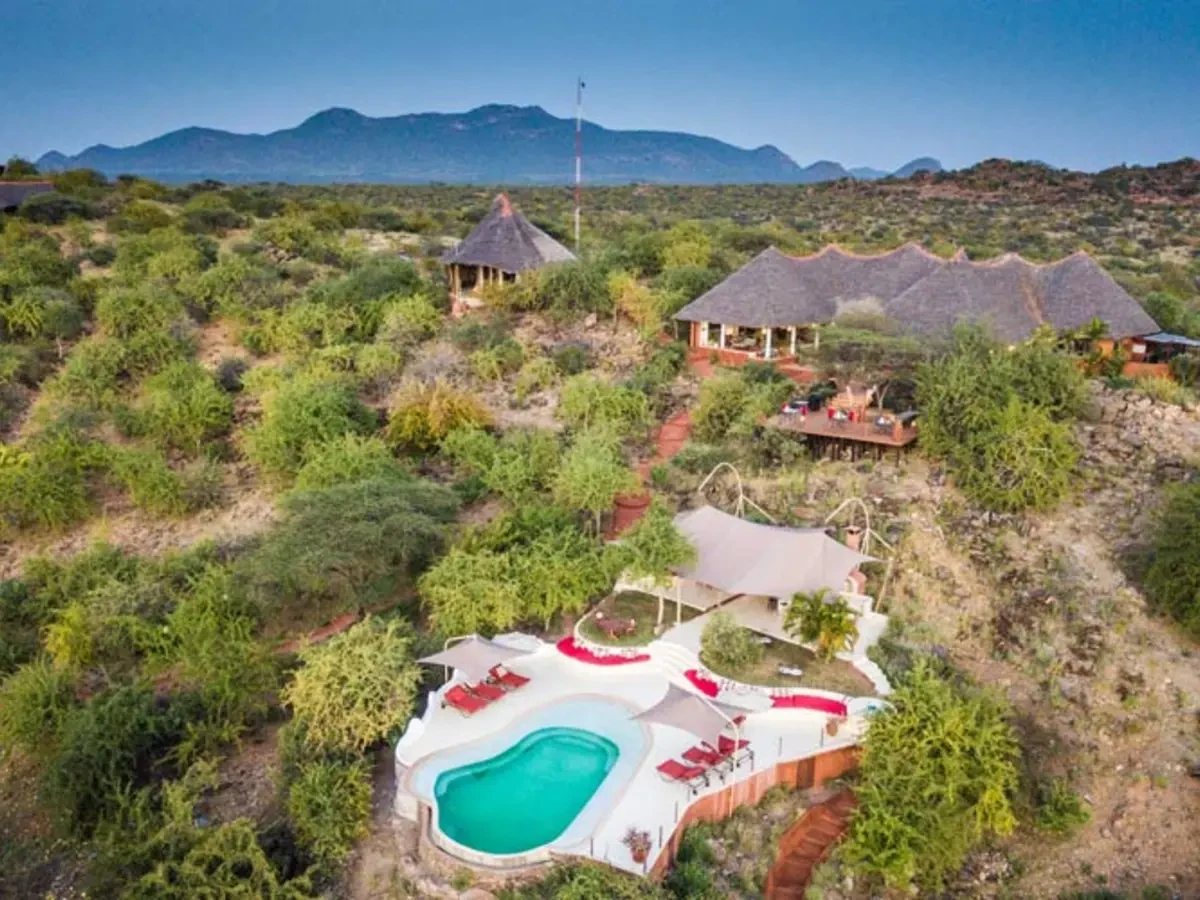
The Ewaso Nyiro is the reserve's organising fact. In semi-arid country the river's forest is the only broad shade and its water the only reliable drink, so the day's viewing follows a rhythm the plains parks lack: elephant families arriving through the morning to drink and bathe, predators using the riverine cover, everything drifting toward the water as the heat builds and dispersing again toward evening. Camps sit on the banks for this reason, and a shaded veranda over the river is a hide in all but name.
Season sharpens the pattern. The dry months, roughly June to October and January to February, pull wildlife tightly onto the river and make viewing almost mechanical in its reliability; the rains scatter the game across a briefly green country, cut the dust and bring the birds, at gentler rates and with the river's own moods, including occasional high water, part of the picture. The desk states the season's character for your dates rather than promising the river's behaviour.
03
The community north, and the Reteti story
Beyond the reserve boundary the north is community land, conservancies owned by Samburu communities whose leases and fees fund security, schools and the grazing plans that keep wildlife welcome, the same economics our Laikipia and greenwash pages set out. The Mathews Range country of Namunyak carries the story furthest: Reteti, the community-owned elephant sanctuary, rescues and rears orphaned calves for release, staffed and directed by the community itself, and a visit there is conservation you can stand inside.
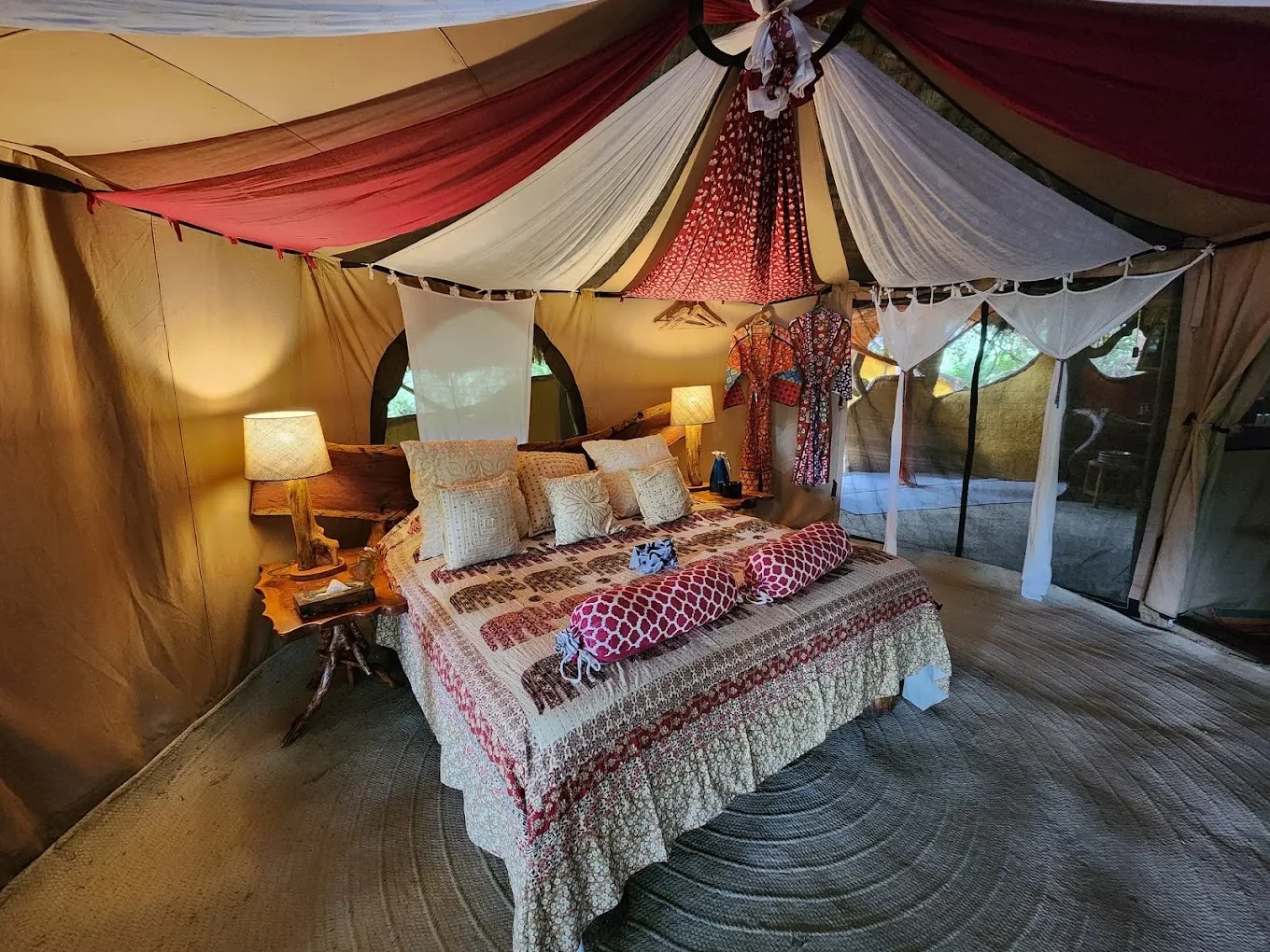
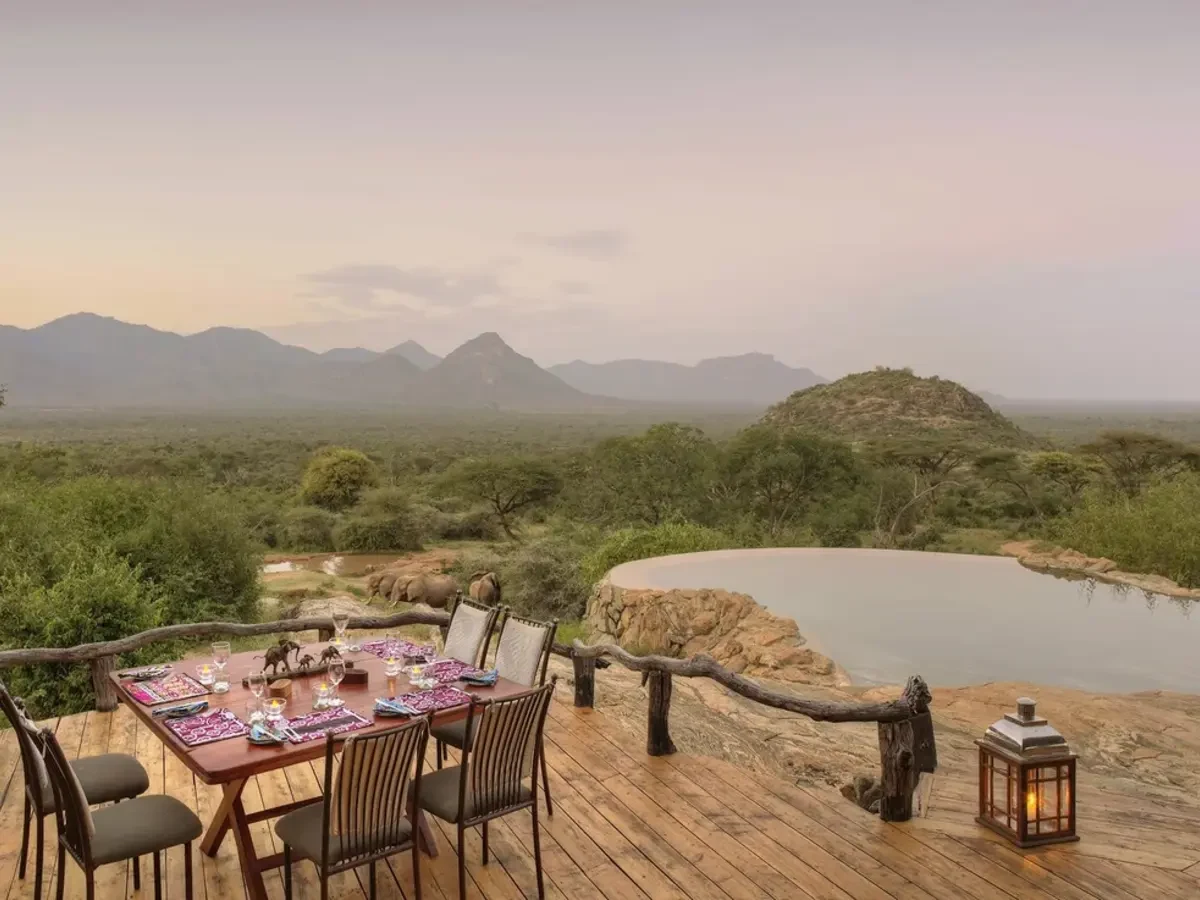
The camps of the far north, Sarara's ground among them, sell this register, wilderness with a community at its centre, walking and camel-supported days, waterholes below the deck, and singing wells where herders water cattle in a tradition older than any park. It is a different product from the reserve's river theatre, and the best northern files run both: the reserve for the river and the specials, the community north for depth, on horizons that book gently outside peak.
04
Where Samburu fits, and how Sail routes it
Three shapes carry most northern files. The fly-in chapter: a scheduled hop from Wilson to the reserve's airstrips, two to three nights on the river, back to the network, which slots the north into any Kenya circuit as cleanly as the Mara. The Laikipia continuation: the plateau by road or air into Samburu's country, the plateau's rhino and walking flowing into the north's specials, the two-act structure our Laikipia page describes. And the returner's north: Samburu plus the community conservancies as the trip itself, for travellers whose first safari was the south and whose second wants a new alphabet.
The fee layer is the county's published rate, currently 85 US dollars per person per twenty-four hours for the reserve, with community conservancies pricing their own nights, each restated as its own line per the fee page. From the Sail operations desk, checked August 2026: Samburu files book on gentler horizons than the Mara outside the peak weeks, run smaller and quieter, and produce the debrief line we hear most often from returners, that they had not known Kenya could look like this.
The Special Five
Grevy's zebra, reticulated giraffe, gerenuk, beisa oryx, Somali ostrich: resident, likely, never promised on a given drive.
The river rule
The Ewaso Nyiro concentrates the day: dry months pull wildlife tight to the water, rains scatter it across green country.
The fee line
The county reserve at 85 US dollars per person per twenty-four hours on the current schedule; community conservancies price their own nights.
The shapes
A fly-in chapter from Wilson, the Laikipia continuation, or the returner's north with the community conservancies as the trip.
Questions travellers ask
Useful answers, before you decide.
What are the Samburu Special Five?
Grevy's zebra, reticulated giraffe, gerenuk, beisa oryx and Somali ostrich: dry-country species of northern Kenya that the southern parks do not hold. All resident and likely across a stay; none promised on a given drive.
Is Samburu good for a first safari?
Excellent as part of one, paired with the Mara or Laikipia for a two-act Kenya; as a returner's second trip it shines brightest, because every drive shows something the south never did.
How do I get to Samburu?
Scheduled flights from Nairobi's Wilson to the reserve's airstrips, or by road as the continuation of a Laikipia file. Both are planned as their own lines on the quote.
When is the best time to visit Samburu?
The dry months concentrate wildlife on the river with near-mechanical reliability; the rains scatter it, green the country and bring the birds at kinder rates. Season character for your dates is stated, not promised.