
The short answer
What to know first.
On a Sail journey the private vehicle is the design, not an upgrade: every family travels in its own vehicle with its own guide, so the days run on the family's rhythm rather than a stranger's timetable. In gorilla country this matters most, because the trek morning splits the family: the vehicle serves the trekkers' dawn briefing run and waits for them, while the children's morning moves on its own arrangement. Child seats, snack stops, nap-length drives and a boot that swallows daypacks and porters' bags are all part of the same decision. Sail confirms vehicle allocation, seating and the trek-morning timings against the actual sector at booking.
At a glance
The planning brief.
The default
Sail journeys run on private vehicles. For families in gorilla country this is not an upgrade but the design.
Why it matters
Split mornings, porters' bags, snack stops and children's rhythms do not fit a shared-seat product.
On trek day
The vehicle serves the briefing run and waits for the trekkers; the children's plan has its own wheels.
Sail verifies
Vehicle allocation, child seats where needed, and the trek-morning timings against the sector.
01
The default, not an upgrade
Sail operates on private vehicles as standard: one family, one vehicle, one guide who learns the children's names on the first drive. Nothing about that is a supplement to be weighed; it is how the journeys are built, and it is in gorilla country that the difference is felt hardest, because the terrain is mountainous, the mornings start early and the family's day rarely moves as one block.
What the family buys with its own vehicle is not space but authorship: when to stop, when to push on, when a picnic beats a schedule, and when a sleeping child is a reason to drive slowly and say nothing.
02
What a family actually needs from its wheels
The list is unglamorous and decisive: properly fitted child seats agreed before travel, a cool box that answers small hungers before they become large moods, a boot with room for trek daypacks and the porters' loads, window seats that rotate without negotiation and a guide who reads the vehicle's energy as carefully as the road.
Drive lengths are designed around the youngest traveller's honest range, with the interesting stop placed before the complaint rather than after it. None of this survives contact with a shared vehicle, which is why the private default is a family decision before it is a comfort one.
03
Trek day, where the vehicle earns its keep
On the trek morning the vehicle takes the trekking adults to the briefing point at dawn and waits through the walk, however long the forest makes it. The children's morning, back at the lodge or out with a community guide, has its own transport where it needs any, so neither half of the family borrows the other's wheels.
The reunion is the payoff: the vehicle that collects tired trekkers already knows where lunch is, and a late trek changes the afternoon calmly because the operations desk, the lodge and both halves of the plan share one sheet.
04
Beyond gorilla country
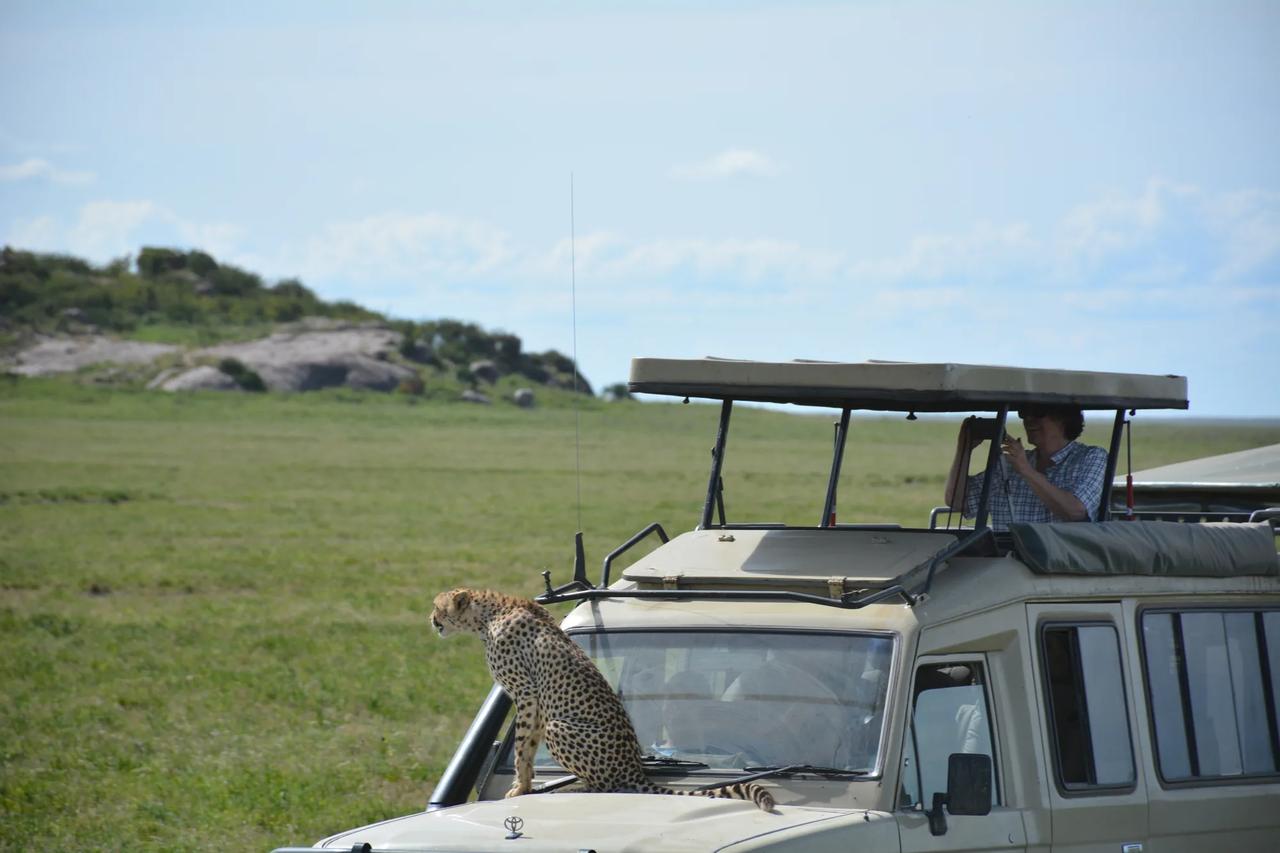
The same logic rides along on the savannah legs: roof hatches the children can actually reach, game drives cut to attention spans rather than fuel tanks, and the freedom to spend a whole morning at one waterhole because somebody fell in love with elephants. The vehicle is the family's private thread through the journey.
Where a route flies between regions, the design keeps the principle: a private vehicle and guide waiting at each strip, so the rhythm the family has built travels with them rather than resetting at every arrival.
Questions travellers ask
Useful answers, before you decide.
Are child seats available?
Yes, agreed and fitted before travel. Ages, weights and seating positions are confirmed at booking so the first drive starts correctly rather than approximately.
Does the vehicle wait during the trek?
Yes. It serves the dawn briefing run and waits for the trekkers, however long the forest sets the walk. The children's plan has its own transport where it needs any.
Is a private vehicle an extra cost on a Sail journey?
It is the standard design: Sail journeys run on private vehicles with their own guide. What each journey includes is set out plainly in the proposal and confirmed at booking.