
The short answer
What to know first.
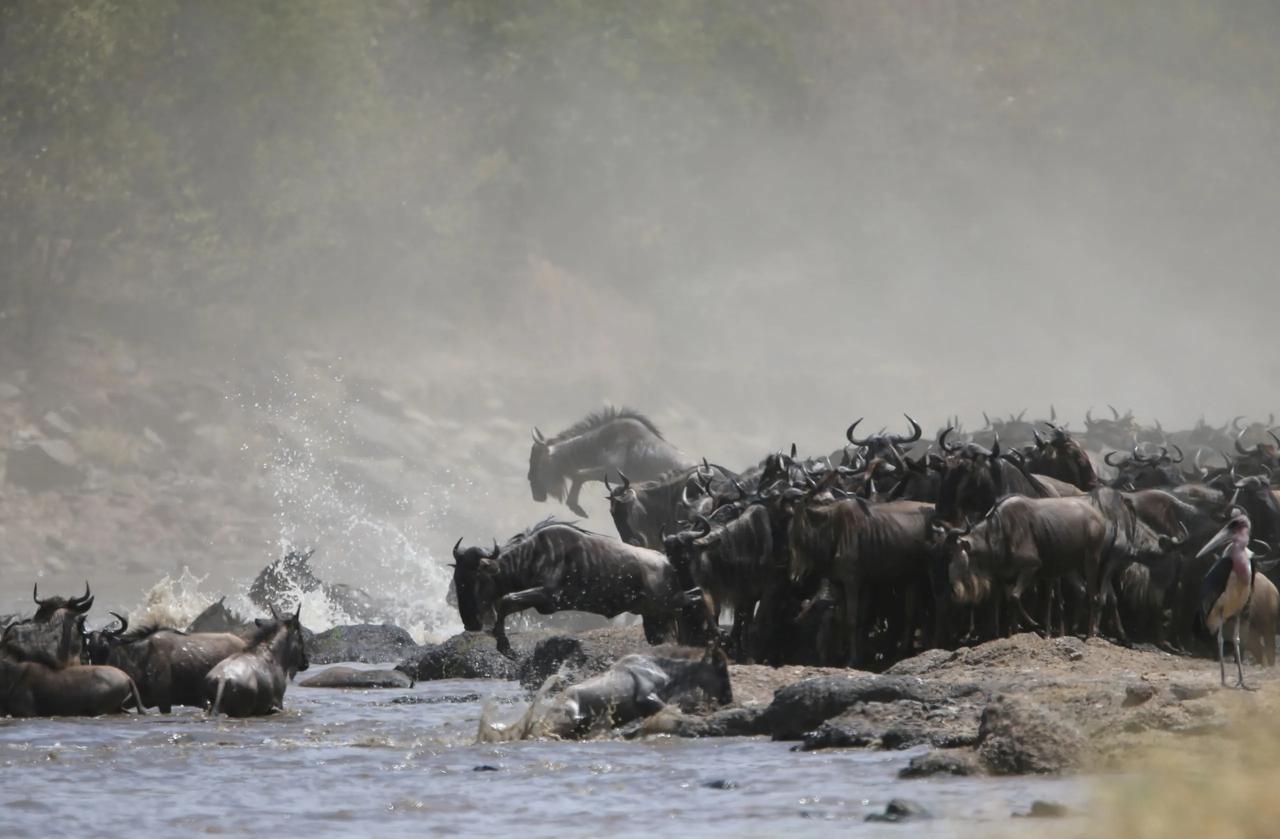
From roughly July to October the wildebeest occupy one river country that happens to hold an international border: Kenya's Maasai Mara on one side, Tanzania's northern Serengeti around Kogatende on the other. The herds cross the same river system in both directions with no regard for the line, so crossing likelihood is not the differentiator the marketing wars pretend; position and mornings are, on either side. What actually differs is structure. Access: the Mara is a short scheduled hop from Nairobi's Wilson airport, the friendlier logistics for shorter files and Kenya-centred routes; Kogatende is deeper travel, reached by light aircraft up the Serengeti's ladder, and suits files already in Tanzania. Fees: Kenya prices the reserve at 200 US dollars per person per day under Narok County, with the neighbouring conservancies at roughly 100 to 140 per person per night; Tanzania prices the northern Serengeti under TANAPA at 82.60 per person per day plus 70.80 per night in concession fees. Character: the Mara's crossing points can draw the larger vehicle gatherings, with the conservancies as the private counterweight; the north is bigger, emptier ground where the season's camps are largely seasonal canvas. Paperwork differs too: Kenya rides on the eTA and sits inside the East African Tourist Visa; Tanzania brings its own visa for most visitors. Sail contracts partner camps on both sides and prices them from one desk, so the honest answer, confirmed at booking, follows availability, route logic and taste rather than inventory.
At a glance
The planning brief.
One river country
Kogatende and the Mara front the same season; herds cross in both directions with no regard for the border.
Fees differ, honestly
Tanzania prices per TANAPA tariff; Kenya per Narok County reserve fee or conservancy bed-night. Both are published.
Style differs more than odds
Camp character, vehicle rules and flying logistics separate the sides more than crossing likelihood does.
Sail contracts both
Partner camps on each side, priced from one desk, so the answer follows availability and taste rather than inventory.
01
What is identical, and worth saying plainly
The ecosystem is one grassland; the river country is one habitat; the season is one season. Herds move and cross on both sides throughout the window, often in both directions in the same week, and a well-positioned camp with a disciplined guide delivers comparable crossing likelihood from either country. Any page that tells you one side owns the crossings is selling its own inventory.
Equally identical is the method: the crossing-mechanism rules this journal has already set out apply on both banks. Nobody schedules the river. Mornings in position are the only honest lever, and three to four nights at the river country is the working minimum on either side of the line.
Guiding discipline is also a constant, and worth naming because crossing season tests it publicly. On both banks, park and reserve rules govern where vehicles may sit and wait; the difference between a spectacle and a scrum is the guide who holds the legal line with the engine off while others creep. Sail briefs the same standard on both sides of the border, because the crossing belongs to the herds and the photograph is better from where the rules put you anyway.
02
Where the sides genuinely differ
Access shapes everything. The Mara sits forty-five minutes from Wilson by scheduled light aircraft, which is why Kenya carries short crossing files so well: three river nights can sit inside a week that also holds Laikipia or Amboseli. Kogatende rewards commitment: the flights ladder up the Serengeti, and the sensible files pair the north with the centre or arrive on the full south-to-north route.
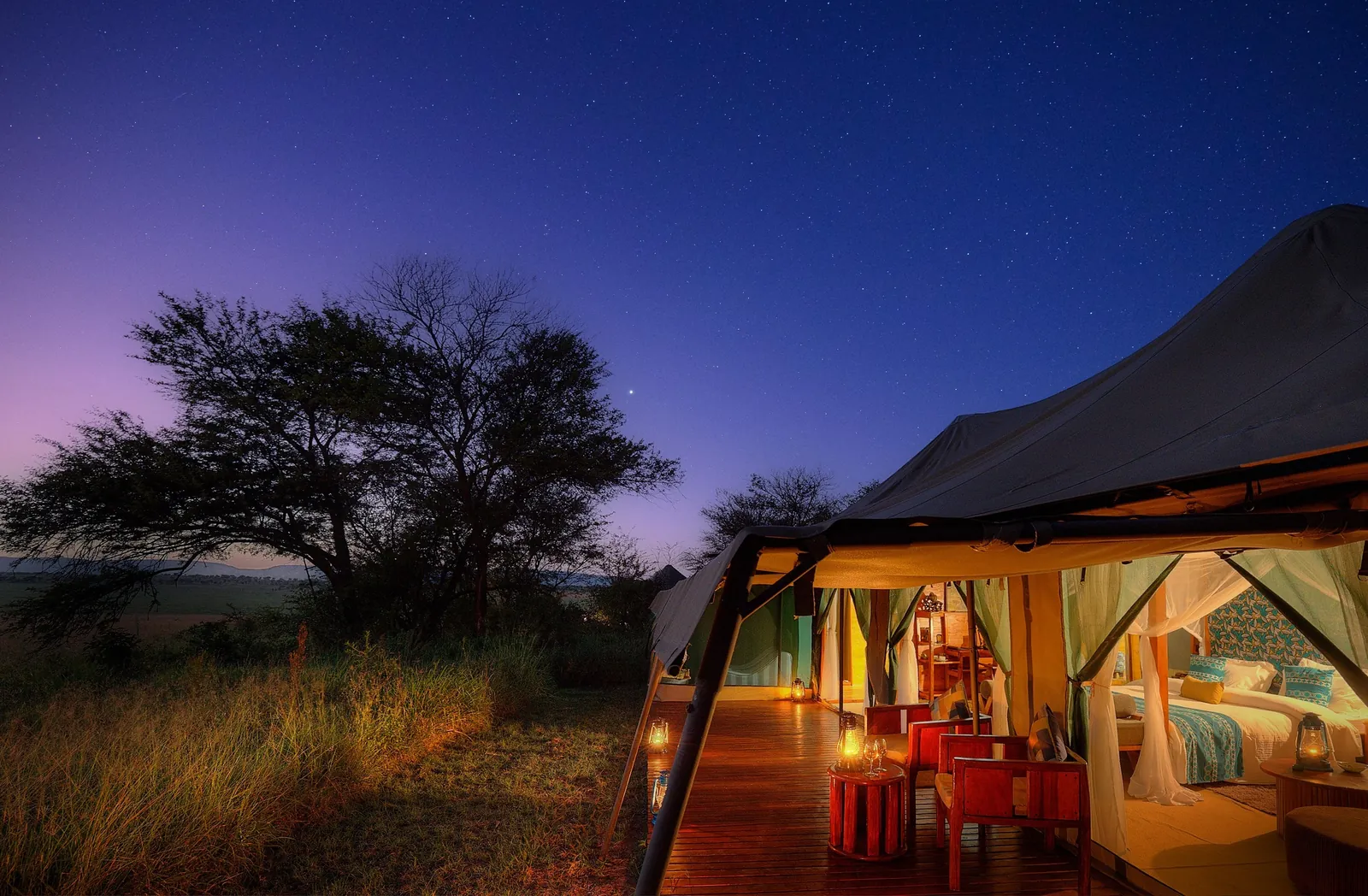
Density patterns differ by structure rather than virtue. The reserve's famous crossing points are public ground and can gather vehicles at a big crossing; the conservancies beside it trade that for member-limited traversing at a per-night fee. The north's scale thins vehicles naturally, though its own celebrated points have their moments. Camp style follows: the Mara mixes permanent lodges and conservancy camps, while the northern season runs largely on seasonal canvas that exists for exactly these months.
Choose the Mara side when
The file is Kenya-centred or shorter, Wilson's schedules matter, conservancy traversing appeals, or the crossing block must sit inside a one-week shape.
Choose Kogatende when
The file is already Tanzanian, the full Serengeti ladder appeals, emptier ground outweighs convenience, and seasonal canvas is a feature rather than a worry.
The fee comparison
Kenya: 200 US dollars per person per day (reserve, Narok County) or conservancy fees near 100 to 140 per night. Tanzania: 82.60 per day plus 70.80 concession per night (TANAPA). Published, fixed, passed through at cost.
The paperwork line
Kenya rides the eTA and sits inside the East African Tourist Visa; Tanzania brings its own visa for most visitors. Two-sided files carry both instruments.
03
Reading the costs honestly
The headline fee gap narrows in practice. Kenya's reserve fee is the region's highest daily figure, but conservancy files replace it with per-night fees that include the exclusivity the reserve cannot sell; Tanzania's lower tariff is paid for in flight sectors, since reaching Kogatende usually stacks more aviation than reaching the Mara. Camp-tier pricing overlaps heavily across the border in season, and both sides' best beds sell out on the horizons our migration-booking page describes.
The design question is therefore rarely which side is cheaper for identical value; it is which structure your money buys more of. A Mara conservancy file buys privacy and short logistics; a northern file buys scale and remoteness. From the Sail operations desk, checked August 2026: priced end to end, comparable files on the two sides land closer than either side's marketing admits.
One structural nuance rewards attention: on the Kenyan side, the reserve-versus-conservancy choice runs through the middle of the crossing question. The famous crossing points sit on reserve ground, so conservancy files drive into the reserve for crossing mornings, paying the daily reserve fee for those days, then return to member-limited ground for everything else. It is a deliberately hybrid shape, and for many files it is the best of the Kenyan argument: public drama in the morning, private ecosystem for the rest.
04
The two-sided file, and how Sail decides
Some seasons the honest answer is both: the herds' river country read as one destination, a conservancy block on the Kenyan side paired with Kogatende canvas, crossing the border once in the direction the route already wanted to travel. It is a bigger, costlier shape that needs the paperwork done properly, and for migration-led travellers with the nights to fund it, it is the complete answer to a question most files must split.
When one side must be chosen, we decide in order: availability first, because the season sells out and a confirmed bed beats a theoretical preference; route logic second, because the side that fits the wider journey saves days and money; style third, because by then the wildlife argument has cancelled itself out. The river runs through two countries and one ecosystem; the file that succeeds is the one that respected the season more than the border.
Questions travellers ask
Useful answers, before you decide.
Which side has more crossings?
Neither, dependably: the herds work the same river system on both sides throughout the window, in both directions. Position and mornings decide what you see, not the flag at the gate.
Which side is cheaper?
Tanzania's daily fees are lower and its access flights usually cost more; Kenya's reserve fee is higher and its logistics shorter. Priced end to end at the same camp tier, comparable files land close; your quote shows both honestly.
Can one trip do both sides?
Yes, with both countries' paperwork and a border crossing designed into the route. It suits longer migration-led files; our entry-paperwork page covers the instruments involved.
Do I need different visas for the two sides?
Kenya operates its eTA and sits inside the East African Tourist Visa; Tanzania requires its own visa for most visitors, regardless of routing. A two-sided file simply carries both, arranged well before travel.