
The short answer
What to know first.
Nairobi is East Africa's great hub and most travellers' least-considered decision: nearly every Kenya journey passes through it, and whether to sleep there is a design question with a clean answer once the flight times are on the table. The night earns its place in three cases: when international arrival lands in the evening, because a night flight followed by a dawn bush connection turns the first safari day into a blur; when the onward bush flight leaves Wilson early, since Nairobi's two airports sit across town from each other and the morning transfer is the connection; and when children or older travellers are on the file and the journey benefits from a pressure valve. The city's own case is real but bounded: the Giraffe Centre's Rothschild conservation programme and the elephant orphanage's morning sessions genuinely reward a half day, Karen Blixen's house adds context for the literary, and the gateway hotels from garden-suburb calm to national-park-edge lodges make the night pleasant rather than penitential. Fly straight through when arrival lands midday with a comfortable afternoon connection from the same airport system, when the file is short enough that every night is contested, or when this is a returning traveller with no city curiosity left. It is the same logic our Kigali page runs for the gorilla circuit, translated to a bigger, busier hub: the city night is bought as protection first and pleasure second, and the flight times decide, confirmed at booking.
At a glance
The planning brief.
The night often protects the journey
Late arrivals, early bush flights and tight connections all argue for a gateway night rather than a gamble.
What a morning is worth
The Giraffe Centre and the elephant orphanage earn a genuine half day, especially with children.
When to fly straight through
Midday arrivals with afternoon bush connections can skip the city with nothing lost.
Sail verifies
Your actual flight times, transfer windows and the gateway hotels that match your route's direction.
01
The connection mechanics, plainly
Nairobi's quirk is two airports: Jomo Kenyatta International for the big jets, Wilson for the bush fleet, and a city's traffic between them. International arrivals connecting to safari flights are therefore not one connection but two, immigration and baggage at one field, a road transfer, then check-in at the other, and the morning bush schedules wait for nobody.
This is why the evening-arrival case is so strong: sleep near the right airport, cross town without pressure, and meet the bush fleet fresh. Midday arrivals with afternoon connections can sometimes run same-day, and the desk's rule is margin: if the plan survives an hour's delay and a slow transfer, fly through; if it needs everything on time, it needs a bed instead.
02
What genuinely earns the morning
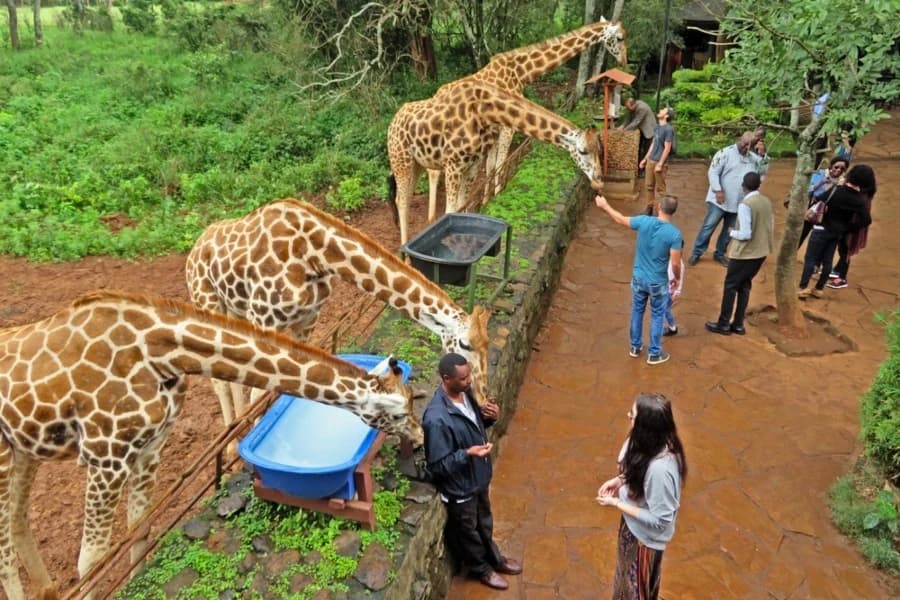
The Giraffe Centre is the city's honest headliner: the Rothschild giraffe breeding and education programme where the animals take pellets from your hand at eye level, best early before the buses. Paired with the elephant orphanage's public hour, where the keepers' work with rescued calves is conservation you can watch, the two make a complete morning that children remember for years and adults photograph like children.
The supporting cast is context rather than spectacle: Karen Blixen's farmhouse for the literary, craft cooperatives for considered shopping, and lunches in the garden suburbs that ease jet lag better than a hotel room. The honest boundary: none of this competes with the bush, and it is not trying to. It is a civilised half day between flights, priced accordingly, and the right files take it gladly.
The city's wild card is Nairobi National Park itself: lion, rhino and giraffe against a skyline, minutes from the runways, at 80 US dollars per person on the current KWS tariff, or 105 packaged with the adjacent orphanage and safari walk. As a first-ever game drive for an arriving family or a last morning for a departing one, it is a genuine safari in miniature, and its existence is the best argument that Nairobi's stopover can be more than logistics.

03
The decision table
Run the cases like the desk does. Evening international arrival: sleep in Nairobi, always; the alternative buys a dawn blur and a first-day nap that costs a game drive. Early Wilson departure: the night before in the city is the connection. Families and elders: the pressure valve pays for itself in the first tantrum or missed nap it prevents. Returning travellers with midday arrivals and same-system connections: fly through and spend the night where the trip actually happens.
The half-honest cases deserve honesty too. A city night purely for the Giraffe Centre is a legitimate choice stated as one, a morning bought for delight rather than protection. And the airport hotel exists for the file that needs a bed but not a city: functional, close and shameless about it. What the desk resists is the accidental night, booked from vague anxiety and spent in traffic; if the night is bought, the morning should be designed.
Sleep in Nairobi when
Arrival lands in the evening, the bush flight leaves Wilson early, or the file carries children, elders or tight nerves.
Fly straight through when
Midday arrival meets a comfortable same-system connection, the file is short, or the city holds no curiosity for you.
Spend the morning on
The Giraffe Centre early, the elephant orphanage's hour, and a garden-suburb lunch: a complete half day, best with children.
The margin rule
If the plan needs everything on time, it needs a bed instead: the itinerary is never braver than its tightest transfer.
04
How Sail books the hub
The gateway inventory is graded by direction: near-JKIA beds for late arrivals and early jets, garden-suburb houses for files spending the morning, and the park-edge lodges, where giraffe browse past breakfast inside the capital, for travellers who want the night itself to feel like Kenya. Transfers are booked with the traffic honesty only a local desk bothers with, and the two-airport shuffle is timed, named and written down.
The same design logic runs the exit: last bush flights land at Wilson with the afternoon ahead, and the choice between an airport day room, a farewell lunch and a final Giraffe Centre run belongs to the file, not to chance. From the Sail operations desk, checked August 2026: the Nairobi nights we book are overwhelmingly protection purchases that guests rate as pleasures, and the complaints we field are almost all from itineraries that tried to be braver than their transfers.
Questions travellers ask
Useful answers, before you decide.
Should I sleep in Nairobi after an overnight international flight?
If you land in the evening, yes, nearly always: the night protects the first safari day. Midday landings with comfortable connections can fly straight to the bush.
Is the Giraffe Centre worth it?
For a morning between flights, genuinely: the Rothschild programme is real conservation with an unforgettable eye-level encounter, best early. With children it is the city's easiest win.
How far apart are Nairobi's airports?
Across town from each other, with the city's traffic between: international jets use JKIA, bush flights use Wilson. The transfer is the connection, and it is planned, not improvised.
Are there hotels where wildlife comes to you in Nairobi?
The park-edge and giraffe-visited properties make the stopover feel like Kenya rather than a layover. They book out early in peak season and suit files spending a full morning.