
The short answer
What to know first.
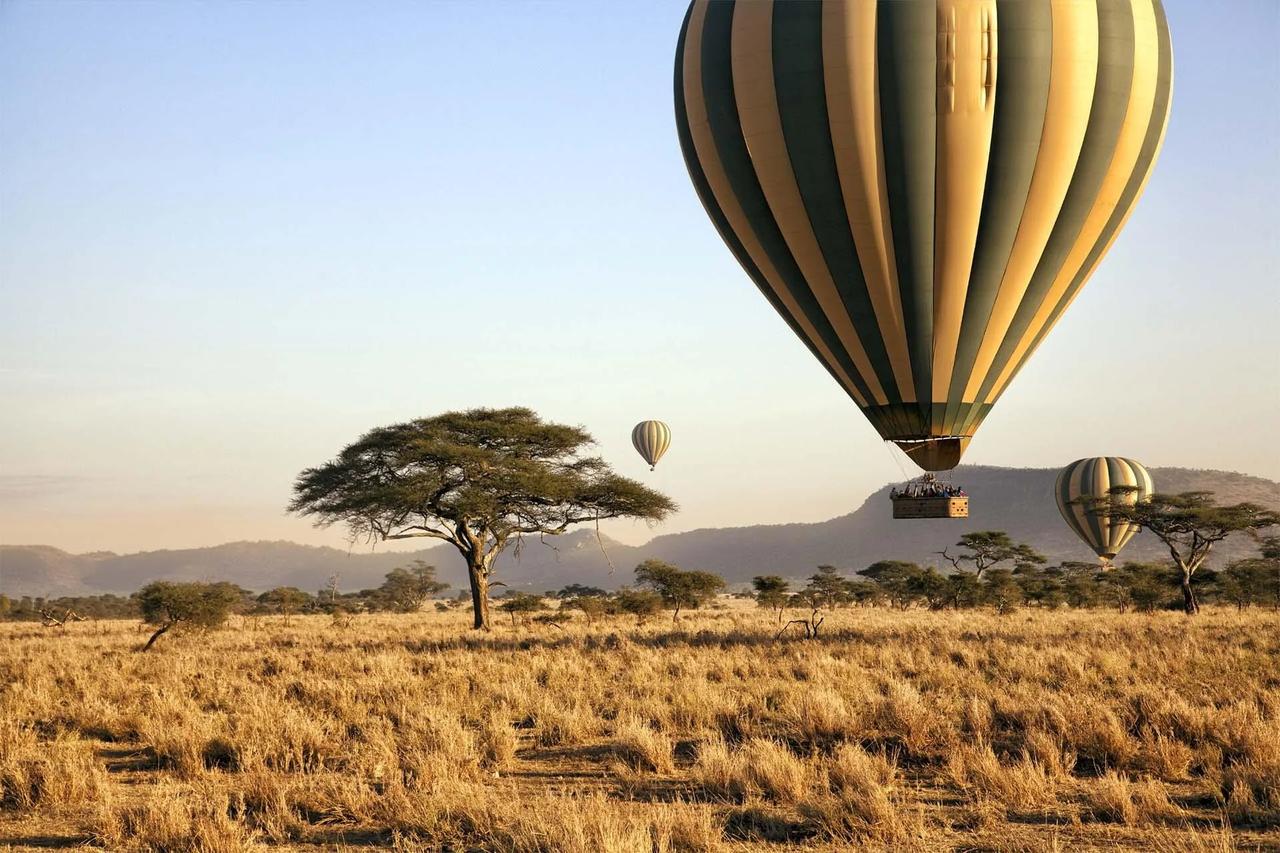
A balloon flight over the Serengeti or the Mara is the priciest single add-on most safari files ever consider, commonly around six hundred US dollars per person at current operator tariffs, reconfirmed at booking, and the honest answer to whether it earns that is: it depends what you are trading. What the basket buys is real and unrepeatable: the ecosystem read whole from above at first light, herds as moving weather across the grass, rivers written out like sentences, near-silence between burner blasts, and the champagne bush breakfast that traditionally follows the landing. What it costs is more than the invoice: a pre-dawn transfer to the launch site, and the surrender of that morning's prime game-drive hours, which on a three-night file is a third of your dawns. The wind holds a veto no operator can override: flights cancel for weather at the pilot's sole discretion, sometimes at the basket's edge, and refund treatment follows the balloon operator's own terms, stated on your file before you commit. Age, height and mobility rules apply under current operator terms, and the baskets fly full. Our register for it is the one we apply to every add-on: a glorious extra for files with mornings to spare, a poor trade for files that cannot afford to lose a dawn. Book it, if you book it, on a morning you can afford to lose twice, once to the flight and once to the wind.
At a glance
The planning brief.
What it truly offers
The ecosystem read whole from above at first light, silence between burner blasts, and a perspective no vehicle can buy.
What it costs
A pre-dawn start, the morning's prime game-drive hours, and a premium price per person at current operator rates.
Weather owns the schedule
Flights cancel for wind and conditions, decided by the pilot on the morning; operator terms govern refunds.
Who should skip it
Serious photographers on a short file, very young children under operator age rules, and anyone whose budget would rather buy another night.
01
What the flight actually delivers
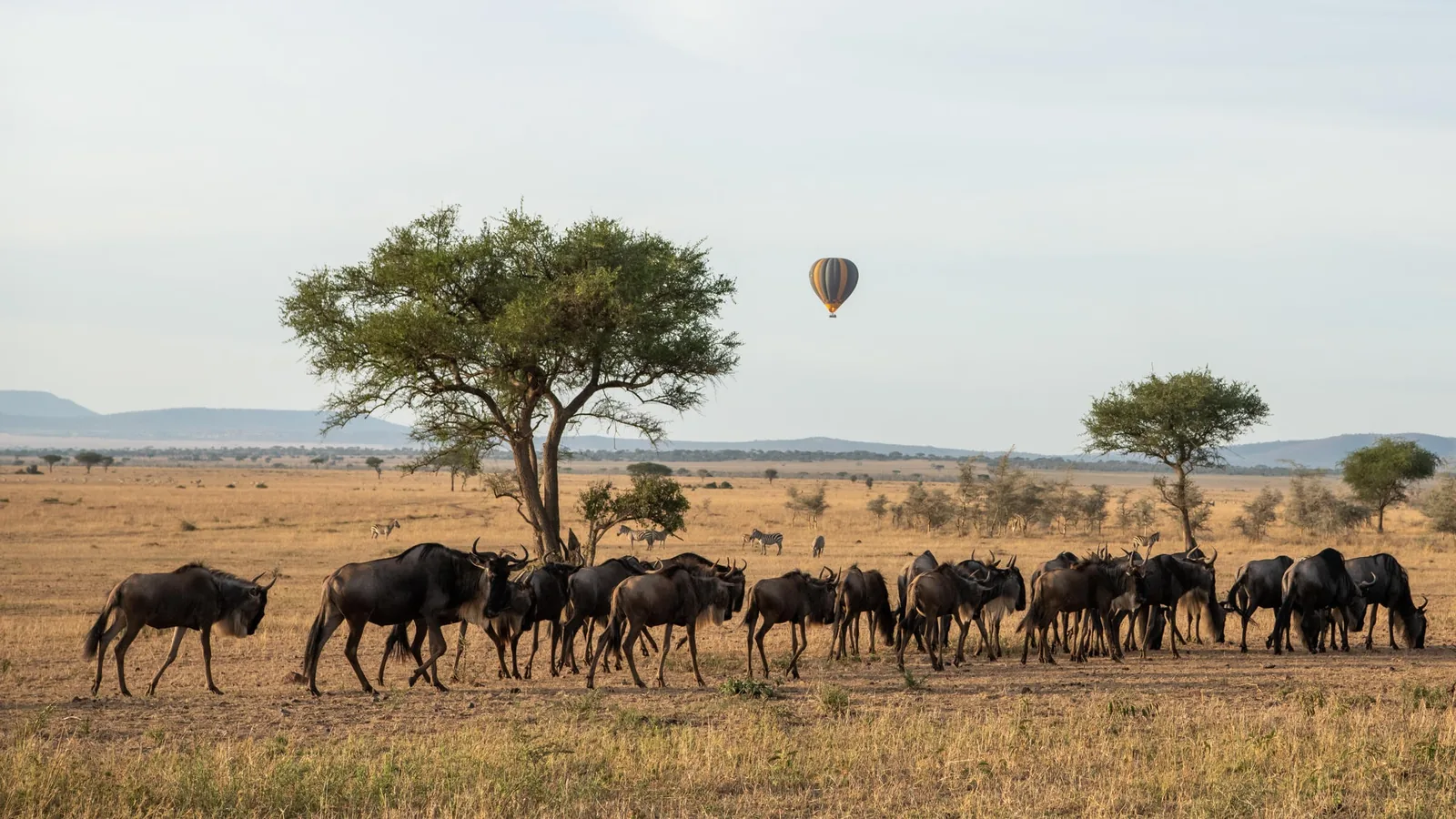
Ballooning's gift is scale. From a few hundred feet at dawn, the ecosystem stops being a sequence of sightings and becomes a single organism: herds drawing lines across the grass, the river systems in full sentence, hippo pools and kopjes and the tracks of everything that moved in the night. Photographers get the landscape frames no vehicle can reach; everyone else gets the rarer thing, which is perspective.
The theatre is complete: the pre-dawn inflation with burners lighting the envelope from inside, an hour's drift wherever the wind decides, a landing that ranges from gentle to comic, and the traditional champagne breakfast in the grass where the basket stops. Guests rarely remember the price a year later; they remember the shadow of the balloon crossing a running herd.
02
What it honestly costs
Price first: current operator tariffs in the Serengeti and the Mara commonly sit around six hundred US dollars per person, children priced by the operator's own scale, and the figure is restated exactly on your quote and reconfirmed at booking. On a couple's file that is a serious line, comparable to a full night at a fine camp, which is precisely the comparison to make.
The subtler cost is the morning itself. The flight consumes the day's best game-drive hours, dawn to mid-morning, and returns you to the vehicle after the light has flattened. On a long file that is nothing; on a three-night crossing-season file it is a third of your prime mornings traded for altitude. This is why the balloon belongs on the longest stop of the itinerary, never wedged into the shortest.
03
The wind's veto, and the fine print
Balloons fly at the weather's pleasure. The pilot's decision is final and can come the evening before or at the field itself; wind aloft that passengers cannot feel on the ground grounds flights on beautiful-looking mornings. This is not operator caprice but the entire safety culture of the sport, and the correct response to a cancellation is relief that the culture holds.
The commercial mechanics deserve plain statement before you commit, and on Sail files they get it: the balloon is a third-party service under the operator's own terms, cancellation and refund treatment follows those terms, and we state them on the file rather than summarising them hopefully. Age minimums, height considerations and mobility requirements apply under current operator rules, and pregnant travellers are generally not carried. Ask us for the current terms sheet; it is one page and worth the two minutes.
Book it when
The file has four or more nights at the launch region, the budget absorbs the line without cannibalising nights, and the traveller wants perspective more than sightings.
Skip it when
The stay is short, the file is built around crossings or specific photography, mobility or age rules bite, or the same money buys another night.
The weather rule
The pilot's cancellation is final and can come at the field. Decide in advance that it is weather, not failure, and know the refund terms before flying.
The timing rule
Longest stop of the itinerary, never the shortest; and never the only morning at a place you crossed the world to see.
04
Who it is really for, and how Sail books it
The balloon's natural constituency: anniversary and honeymoon files marking the trip with one grand gesture; travellers on longer stays with mornings to spare; landscape photographers; and anyone for whom flight itself is the point. Its poor fits are equally clear: serious wildlife photographers on short files, who need the vehicle at dawn; very young children under operator age rules; and budgets where six hundred dollars is a night of safari, because the night usually wins.
Operationally we book the established operators only, position the flight on the file's longest stop, hold the morning's vehicle anyway so a cancellation converts instantly into a full game drive, and state price, terms and refund treatment in writing. From the Sail operations desk, checked August 2026: roughly half our guests who ask about the balloon end up flying, and almost none of either half regret their choice, which tells you the honest briefing, not the balloon, is the product.
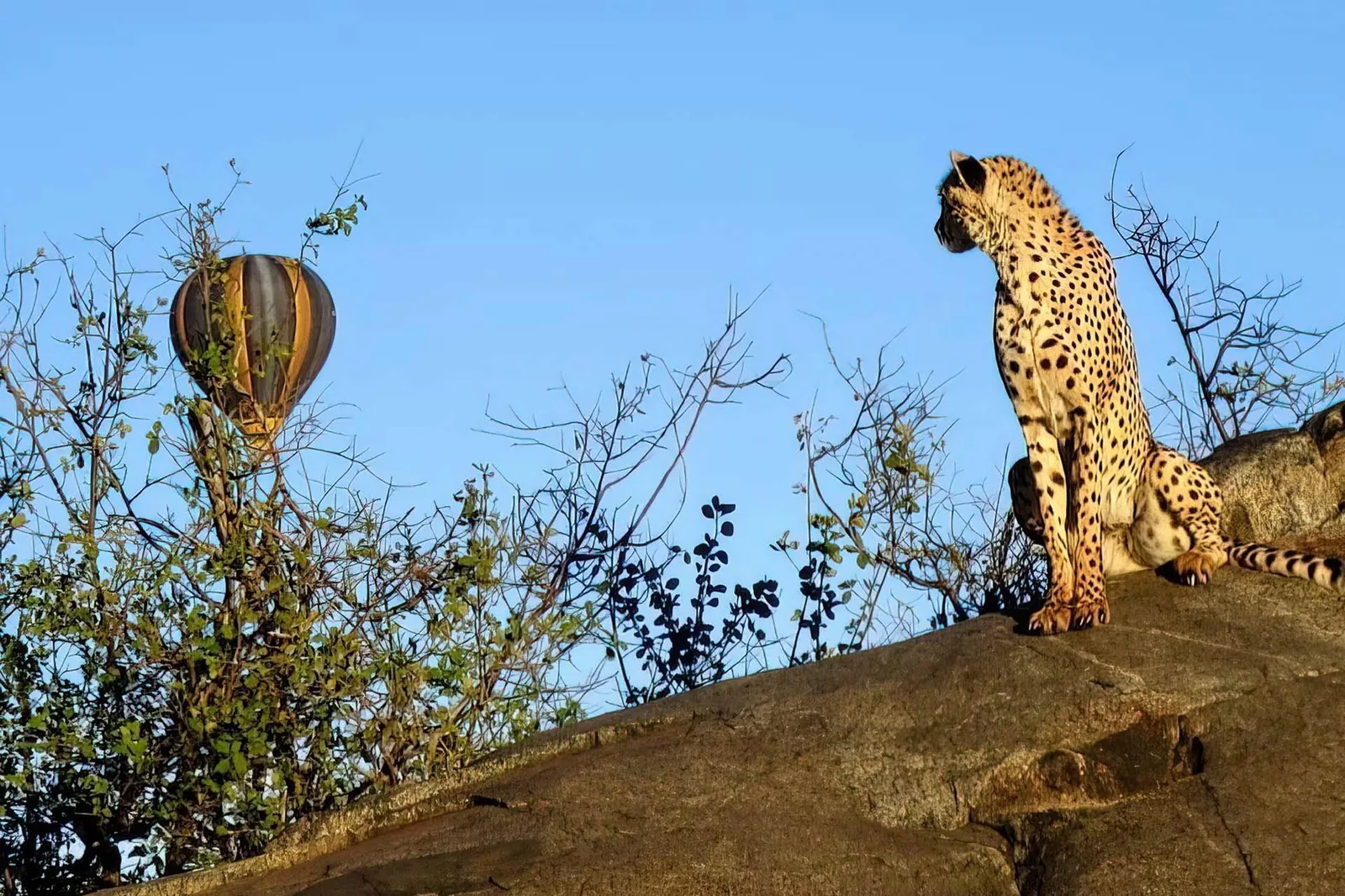
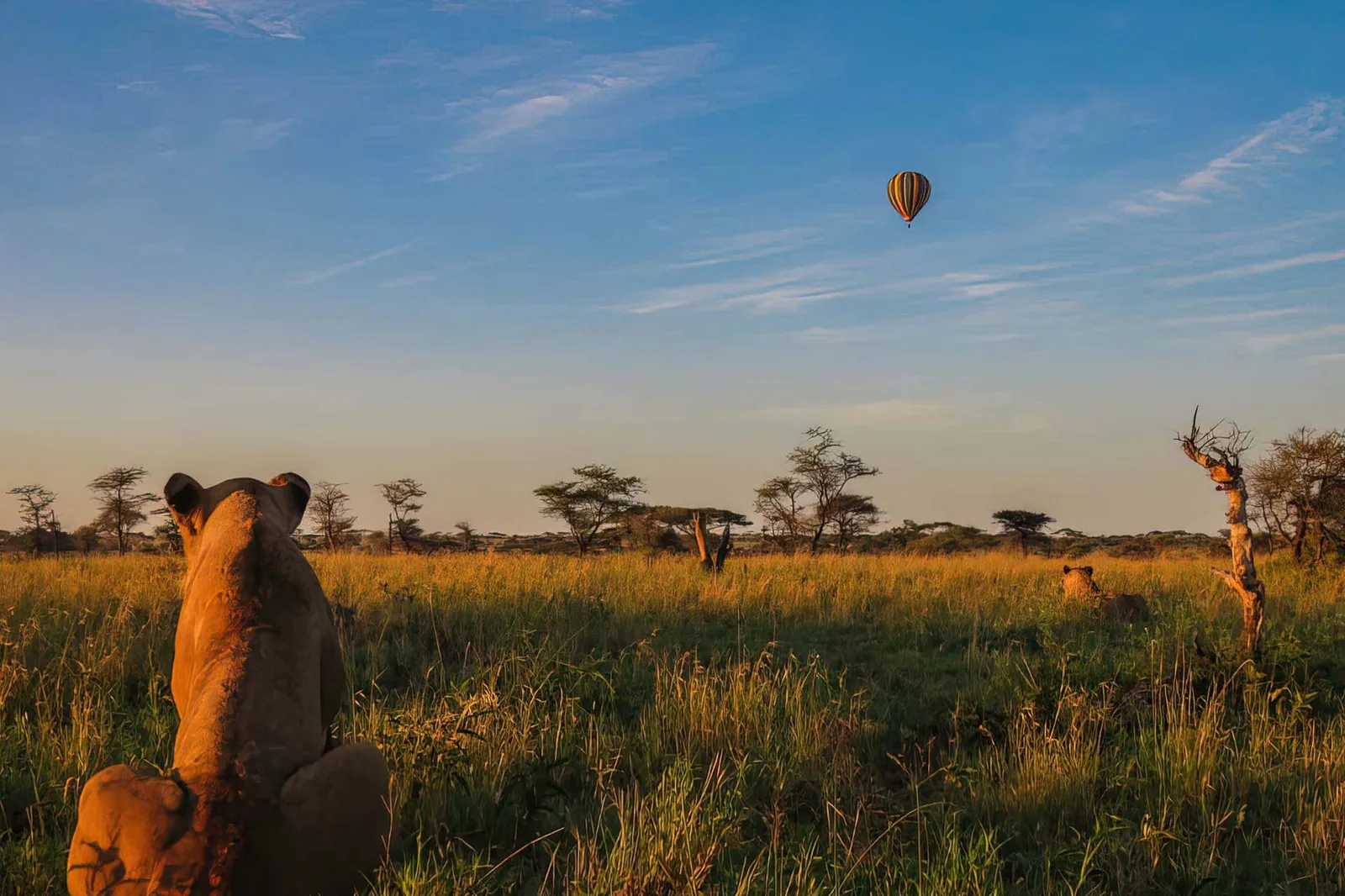
A note on what the flight does to the wildlife, because thoughtful guests ask: the operators fly established corridors under park oversight, and the animals' indifference is visible from the basket, herds grazing under the shadow, cats ignoring the burner. The regulated operation is part of what the licence fees fund, and it is a reason to book the established companies rather than any informal alternative that might ever be offered: in ballooning, the boring operator is the right one.
Questions travellers ask
Useful answers, before you decide.
How much does a balloon safari cost?
Commonly around six hundred US dollars per person at current Serengeti and Mara operator tariffs, restated exactly on your quote and reconfirmed at booking. Children price by the operator's own scale.
What happens if the flight is cancelled for weather?
The pilot's call is final, sometimes at the launch field. Refund treatment follows the balloon operator's terms, which we state on your file; on Sail files the morning's vehicle is held so the day converts to a full game drive.
Is the balloon suitable for children or older travellers?
Operators apply age minimums and height and mobility requirements under current terms, and the landing can be abrupt. We check the current rules against your party before the line ever reaches the quote.
Will we see more wildlife from the balloon than a game drive?
Usually fewer individual sightings and one incomparable overview: the balloon shows the system, the vehicle shows the actors. That is why it complements rather than replaces the dawn drive.