
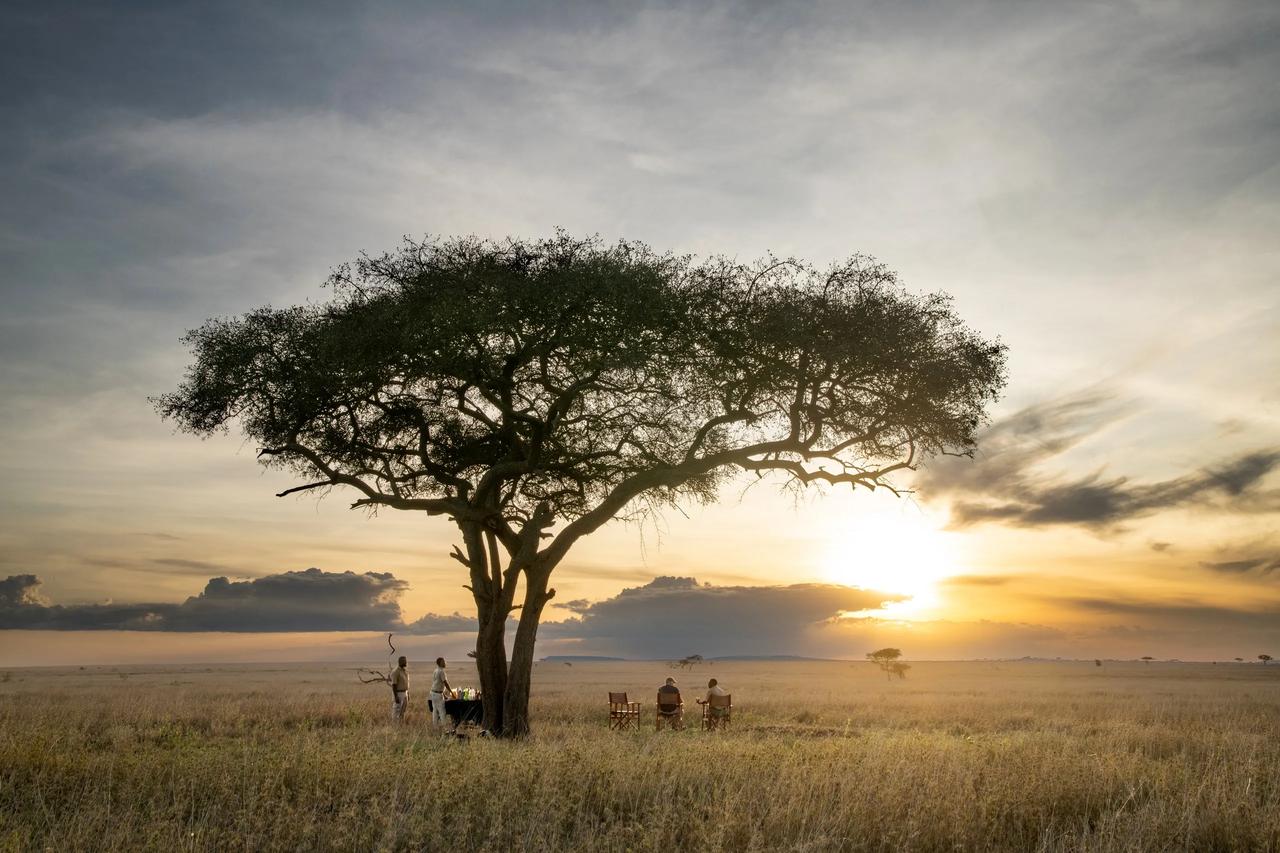
The short answer
What to know first.
The Serengeti is nearly fifteen thousand square kilometres of distinct regions, and the commonest itinerary mistake in Tanzania is treating it as one stop. The arithmetic is unforgiving: arrival and departure days are position days, spent on airstrips, transfers and reaching camp, so a two-night stay yields roughly one full game-viewing day in a park the size of a small country. Three nights in a single region is the honest floor, two proper days with dawn starts and unhurried sightings. Five to six nights carries two regions, the south and centre in the green months or the centre and north in crossing season, and is where the park's scale starts working for you instead of against you: each region's character gets its days, and the transfer between them becomes a game drive rather than a loss. Seven and more belongs to crossing-season files holding a river block, photographers, and returning travellers. The fee structure quietly agrees, since TANAPA's published rates, currently 82.60 US dollars per person per day with 70.80 per person per night in concession fees, price each day identically whether you spend it repositioning or watching lions. Flying in changes the shape, not the principle: a fly-in two-nighter is still one real day. All figures and availability confirmed at booking; the honest short version is that the Serengeti rewards exactly the nights most itineraries are too hurried to give it.
At a glance
The planning brief.
Three nights is the floor
One region, properly: fewer nights spend most of their hours arriving, positioning and leaving.
Five to six for two regions
Pairing regions (south and centre, centre and north) is where the park's scale starts to make sense.
Two-night stands fail
The arithmetic of airstrips and transfer mornings leaves a two-night stay roughly one real game-viewing day.
Sail verifies
Regional position by month, flight schedules and camp availability before the route is shaped.
01
The arithmetic of a Serengeti day
Count honestly. The arrival day is largely spent arriving, whether by the drive from the highlands through the Naabi gate or by the morning's flights and the airstrip transfer; the departure day reverses it. A two-night file therefore holds one complete day, and that day carries the whole park on its shoulders: one dawn, one stretch of good light, one chance for the sighting weather to cooperate.
This is why the two-night stand consistently produces the strangest reviews the Serengeti gets: magnificent and exhausting, wonderful but rushed. The park did not fail; the arithmetic did. Wildlife does not perform on the day the schedule allotted, and the traveller who gave the world's most celebrated ecosystem one working day was betting rather than designing.
02
Three nights: one region, properly
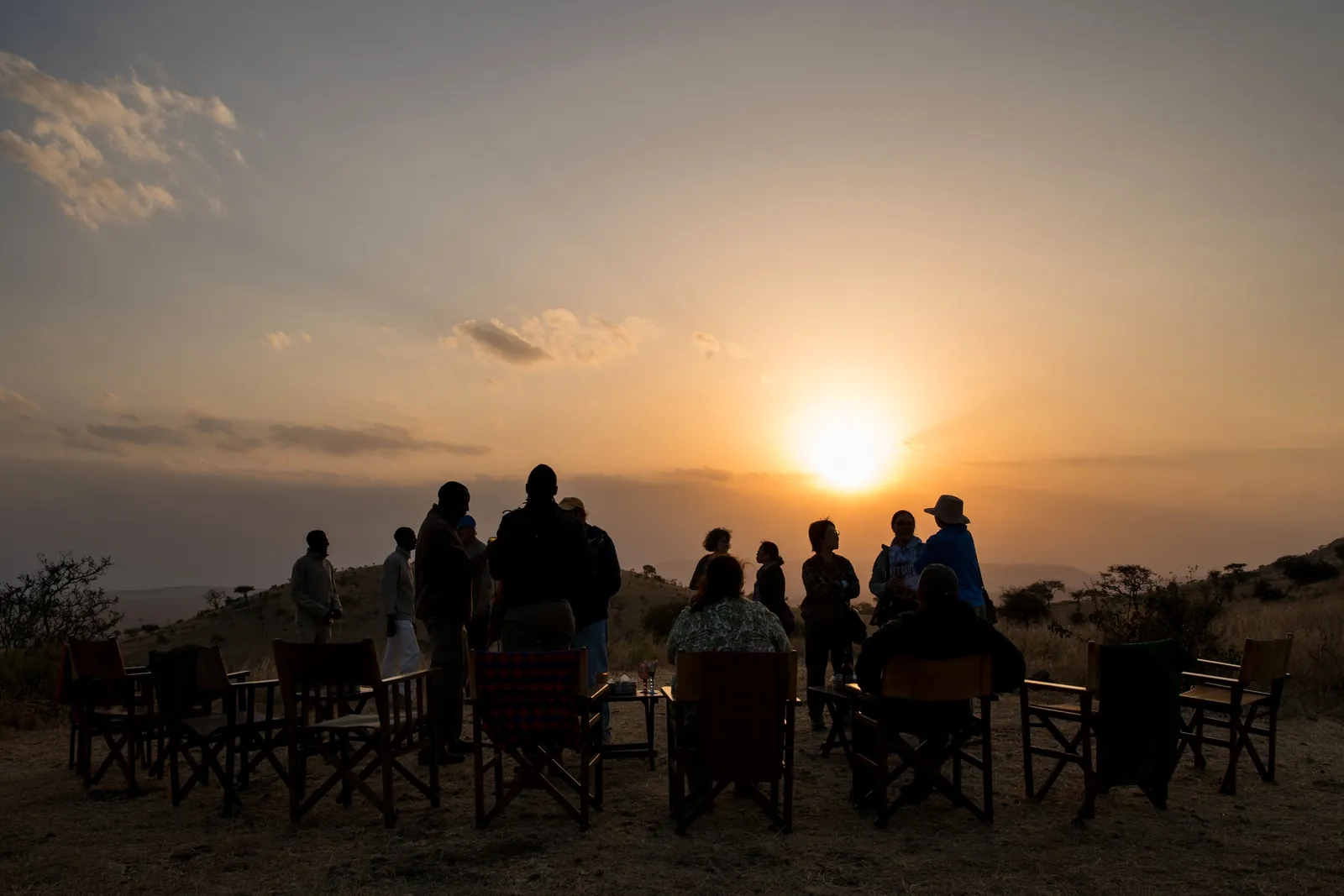
Three nights buys two complete days in one region, and the difference from one day is not incremental but categorical: a slow morning with cheetah can be afforded because tomorrow exists; a distant rumour of wild dog can be chased; an afternoon can be surrendered to the camp's own valley without the feeling of spending the only coin.
The region should match the month, which is its own discipline and has its own page in this programme: the southern short grass in the calving months, Seronera's year-round density for first files, the north in crossing season. Three nights in the right region beats five in the wrong one, and the itineraries that treat the Serengeti as interchangeable acreage usually chose the wrong one.
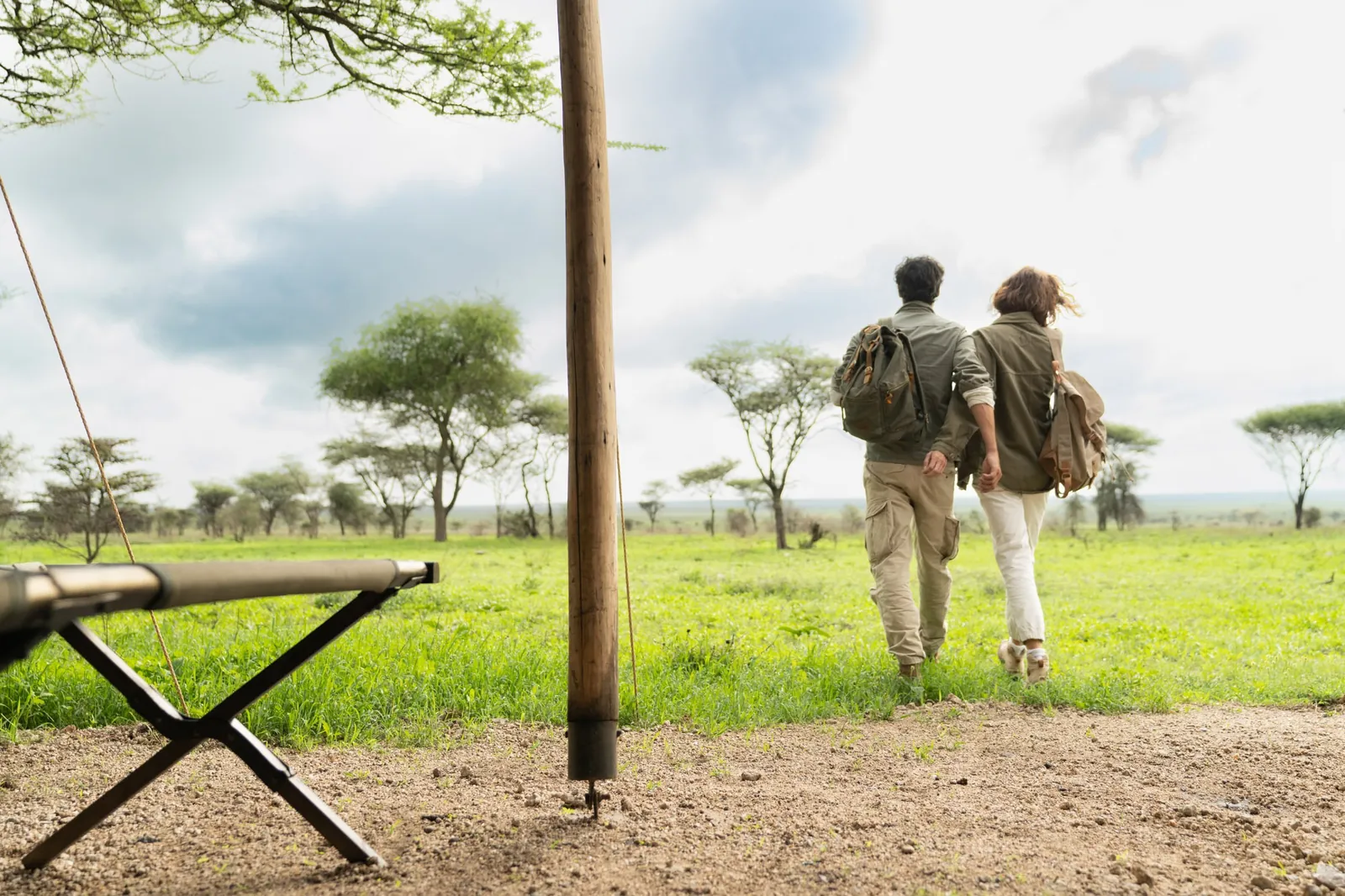
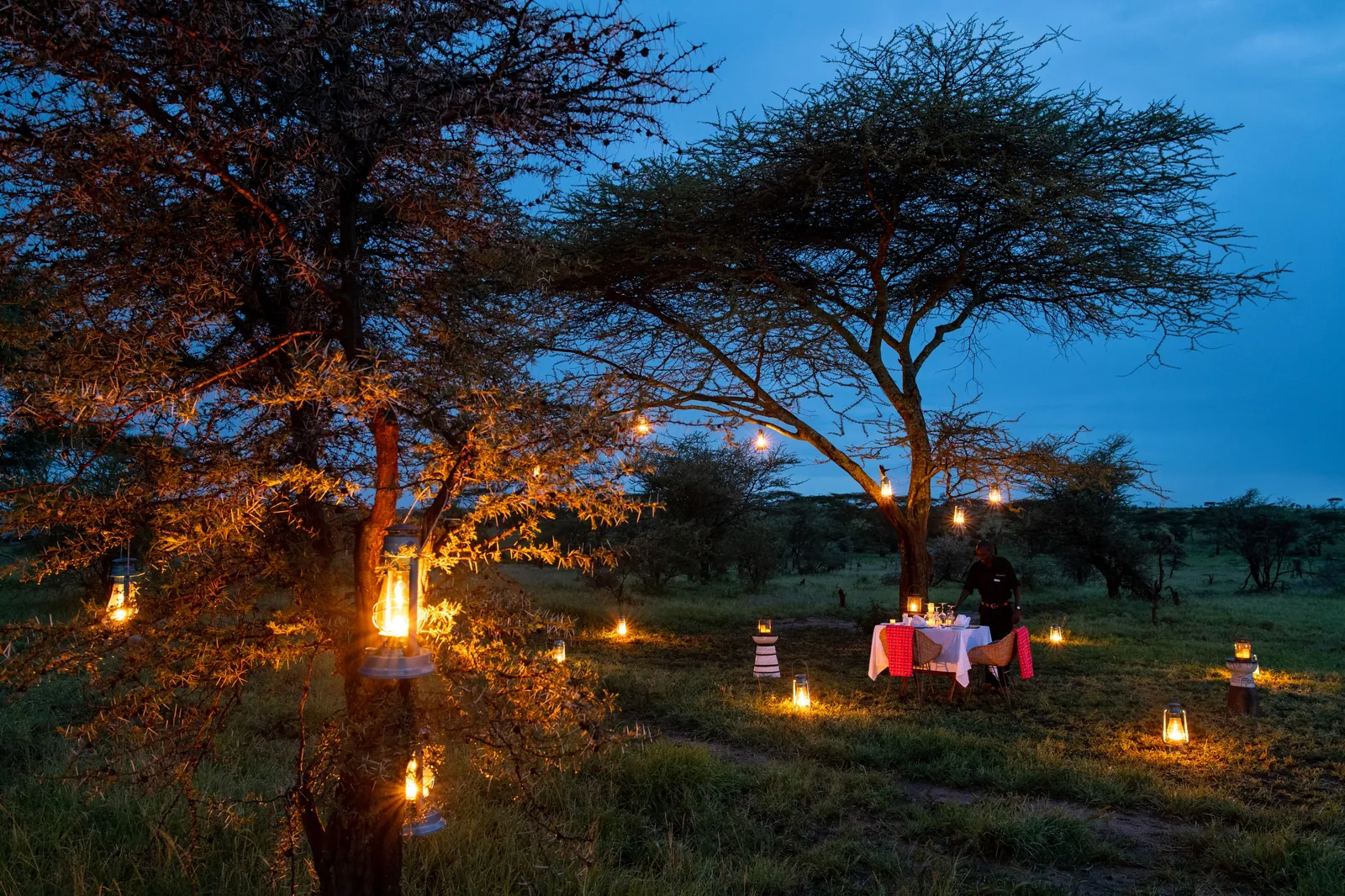
Three nights also buys the day its hours back. Camp stops being a bed near an airstrip and becomes a place: a slow lunch watching the waterhole, the short guided walk where regulations permit one, an afternoon of doing nothing in particular in the exact landscape people cross oceans to reach. The Serengeti's most underrated sighting is the one from a camp chair, and it is only available to files that are not packing.
03
Five, six, and when more is honest
Five to six nights is the designer's answer: two regions at full strength. The green-season pairing of Ndutu's plains with the central valleys, or the dry-season ladder from the centre up to the river country, gives the park's scale a narrative shape, and the repositioning day between regions is itself a game drive across ground most short files never see.
Beyond six, honesty requires a reason, and good ones exist: a crossing-season block at the river where more mornings genuinely buy more probability, a photographic file working specific light, a first safari that is also the only safari and wants the full ladder from south to north. The reason that does not survive contact with experience is completionism; the Serengeti is not a list to finish but a place to be.
Worked examples make the shapes concrete. A February file might run three Ndutu nights on the calving grass and three in the central valleys. A September file might ladder three central nights up to four at the river country, crossing-mechanism rules applying. A first-and-only safari in June might take the full week: south, centre and west or north as the year's grass dictates. Each shape gives every region its complete days and turns the moves into game drives.
Two nights
Roughly one real day. Defensible only as a taste inside a longer Tanzanian circuit, never as the plan for the main event.
Three to four nights
The honest floor: one region with two to three complete days, matched carefully to the month.
Five to six nights
Two regions at full strength with a working transfer day between: the shape most Sail Serengeti files take.
Seven and more
Crossing blocks, photographers, once-in-a-life files running the full south-to-north ladder. Needs a reason, and the good reasons are common.
04
Fly-in, drive-in, and what the fees reward
Flying compresses the position days: a morning flight can put you on a game drive by midday, which strengthens the case for three-night blocks in two regions rather than one long stay. Driving in through Ngorongoro has its own logic, stacking the highlands and the crater into the route, and turns the arrival day into a slow descent through the ecosystem rather than a queue at an airstrip. Both work; they simply move where the hours are spent.
The fee layer is indifferent and worth reading: TANAPA prices each Serengeti day at the same published rate, currently 82.60 US dollars per person per day plus 70.80 per person per night in concession fees, whether the day was spent repositioning or parked beside a kill. Short stays therefore pay the same daily rate for thinner value. From the Sail operations desk, checked August 2026: the files that feel expensive per memory are almost never the long ones.
Questions travellers ask
Useful answers, before you decide.
Is two nights in the Serengeti ever enough?
As a taste inside a longer circuit, it can earn its place. As the trip's main event, the arithmetic of position days argues no: you are giving the largest chapter one working day.
How many nights for the migration specifically?
In crossing season, three to four at the river country is our working minimum for the odds to be worth their cost; the crossing-mechanism page explains why more mornings are the only honest lever.
Does flying in save enough time to shorten the stay?
Flying converts position days into half-days, which strengthens short blocks; it does not repeal the principle. A fly-in two-nighter still holds one full day.
Which region should get the nights?
The month decides: south for the calving weeks, the centre for year-round density, north for the crossing window. Our region-by-month page carries the full map, and live availability shapes the final answer at booking.