

The short answer
What to know first.
A second gorilla trek is not the only reason to stay longer in Bwindi, and often not the best one. The forest is one of Africa's great birding destinations, an Albertine Rift habitat whose endemic species draw birders across continents, and its non-permit days are genuinely rich: guided birding walks along the forest edge and into permitted trails, waterfall walks in the sectors that hold them, tea-country and community visits including Batwa-led experiences arranged with named hosts, and the simple deep rest of a forest lodge with no dawn briefing. A fourth night built this way costs a guide's fee rather than a second permit, changes the stay's rhythm from transaction to residence, and sends guests home with a relationship to the forest rather than a single transcendent hour. Sail arranges the specialist guiding before arrival, matched to the stay's sector and season.
At a glance
The planning brief.
The forest stays open
Bwindi is an Albertine Rift forest with birding, waterfall trails and community walks that need no gorilla permit.
Why a fourth night
A second trek doubles permit cost; a birding and forest day deepens the stay for the price of a guide.
Who it suits
Birders, photographers and any guest who felt the forest deserved more than one morning.
Sail verifies
Which walks and specialist guides run in the stay's sector, arranged before arrival, never improvised.
01
The forest beyond the permit
Gorillas made Bwindi famous, and the forest predates and exceeds its fame: an ancient highland ecosystem of extraordinary depth, dense with life that no permit governs. The trails that need only a park fee and a guide carry mornings as memorable in their own key as the trek itself.
Staying only long enough to trek treats the forest as a transaction. The extra night is how the place stops performing and starts being itself: mist moving through the canopy at first light, the sound changing hour by hour, the forest going about its business.
02
Birding worth planning for
Bwindi's standing among birders is earned: Albertine Rift endemics found in few other places on earth, dawn choruses of genuine complexity, and specialist local guides whose ears are the real instrument. Serious birders plan whole journeys around this forest; travellers who merely like birds are routinely astonished by it.
The craft is in the arrangement: the right specialist guide booked ahead, the morning chosen for the season, and the sector's own trails understood, because each holds different ground. Sail arranges this before arrival, since the best birding guides are as booked as the best lodges.
03
Waterfalls, tea and the forest edge
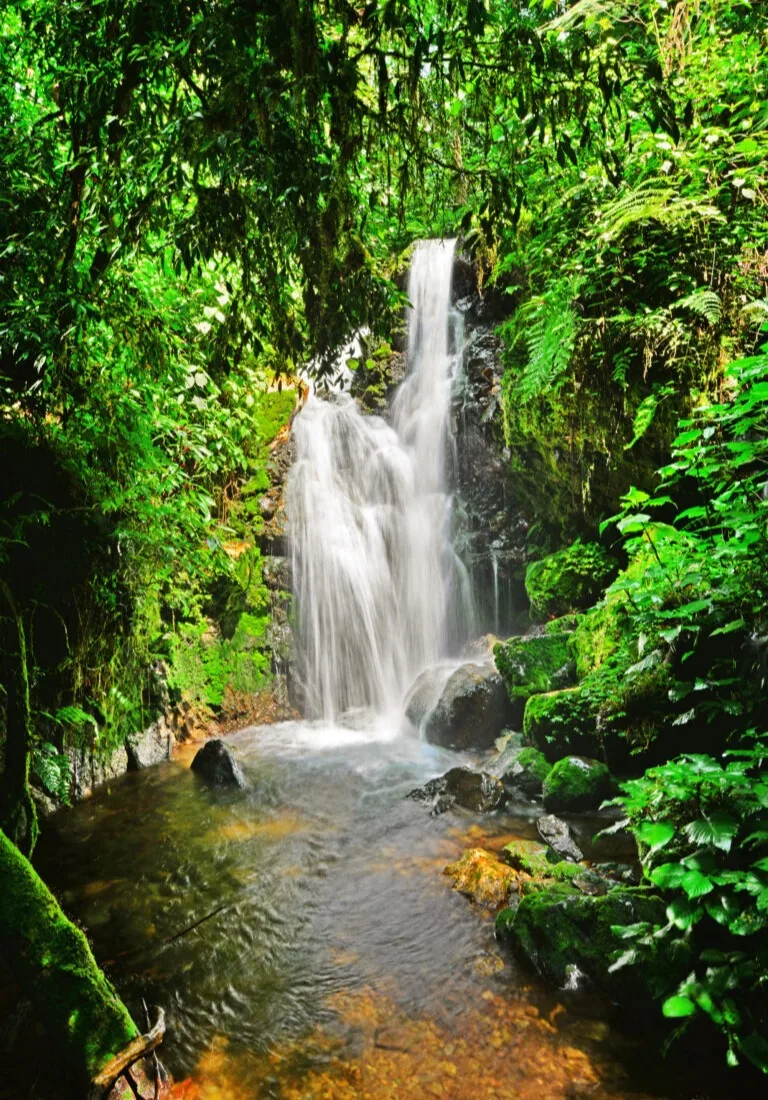
The non-birding day has its own menu by sector: waterfall trails where falls drop through the green, forest-edge walks along the tea line where the cultivated world meets the wild one, and community experiences that carry real encounter rather than performance.
Batwa-led experiences, arranged with named hosts and framed with dignity, belong in this category where the party wants them: encounter, not spectacle, consistent with how Sail's community partnerships work across the region. Each is planned with the lodge and the sector's actual offerings, never improvised from a brochure.
04
The arithmetic of the fourth night
A second trek doubles the permit line, and for many parties that money serves the journey better elsewhere: the specialist birding morning, the waterfall day, and a night whose only appointment is dinner. The comparison deserves to be made explicitly at design rather than defaulted either way.
Some files rightly choose the second trek, and the honest chooser is intent: a party that wants more gorilla hours buys the permit, and a party that wants more forest buys the night. Sail prices both shapes and lets the journey's purpose decide.
Questions travellers ask
Useful answers, before you decide.
Do forest walks and birding need permits like the trek?
They run under park fees and guiding arrangements rather than the gorilla permit system, with terms current at booking. Costs are a fraction of a trek permit, and Sail arranges the right guide ahead.
Which sector is best for birding?
Each sector holds good ground and the specialist guides know their own trails best. Since the permit fixes the sector first, Sail builds the birding plan for the sector the stay actually holds.
Is the fourth night worth it for non-birders?
Usually yes: waterfall trails, community visits and an unhurried forest morning carry the day without a single binocular. The night's real product is the change of rhythm.