
The short answer
What to know first.
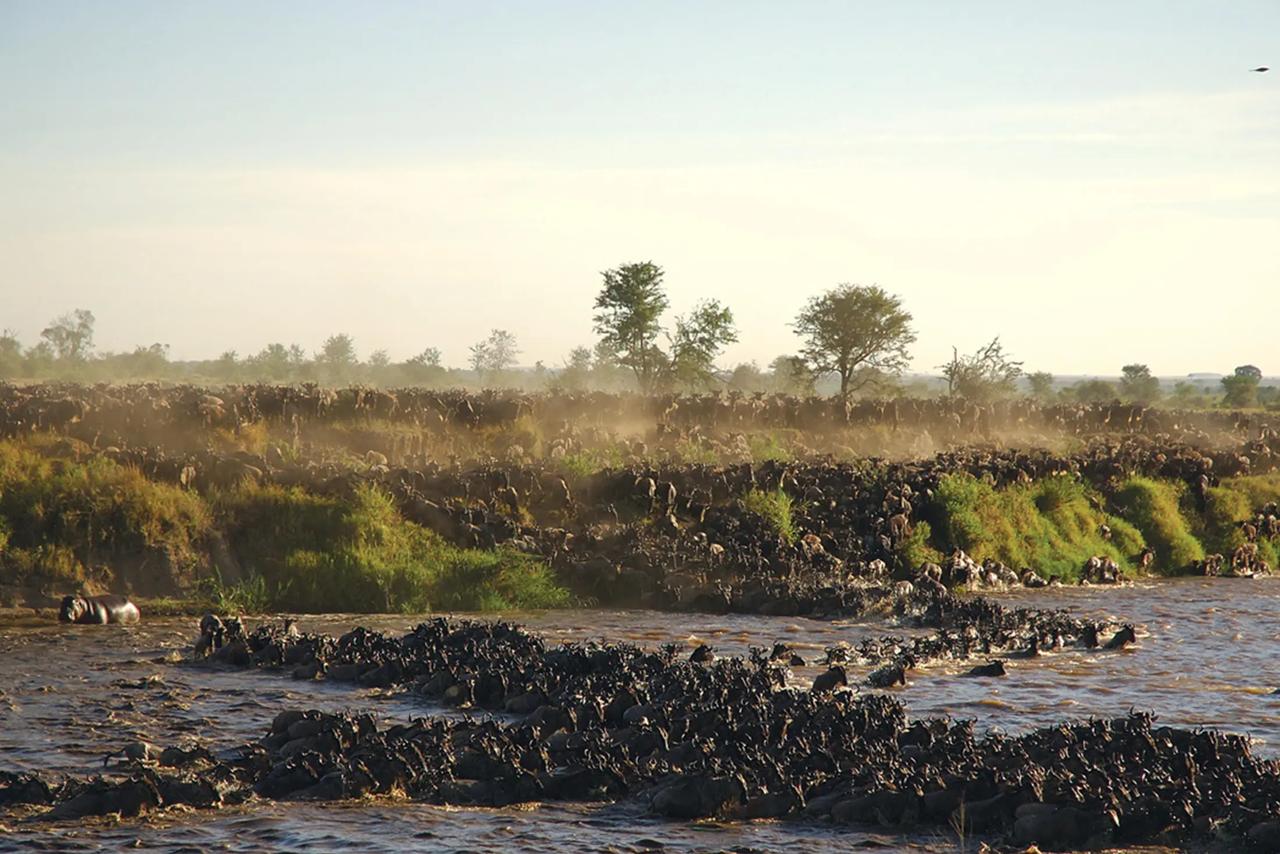
The migration is a year-round movement through the Serengeti-Mara ecosystem. Choose between calving landscapes, long herd movements and northern river regions, then stay long enough for conditions to unfold. No ethical operator can schedule a river crossing.
At a glance
The planning brief.
Calving chapter
Southern Serengeti plains, generally early in the year, shaped by short-grass rainfall.
River country
Northern Serengeti and Maasai Mara positioning, with crossings possible but never guaranteed.
Movement months
Long columns and changing camp locations can be as compelling as dramatic river scenes.
Design principle
Choose a rewarding ecosystem first, then treat any headline event as nature’s decision.
01
The migration is always moving
Wildebeest, zebra and other grazers follow changing pasture and water across a vast system. The useful question is not whether the migration is happening, but what phase and landscape you want to experience.
Resident predators, elephants, giraffes, birds and smaller life do not disappear when herds shift. A migration safari should remain an ecological journey, not a single-species chase.
02
Calving, movement and river country
The southern plains can bring expansive herds and a concentrated calving period when conditions align. Western and central movements have their own river, woodland and predator dynamics. Northern Serengeti and the Maasai Mara bring river geography into focus.
Exact timing varies with rainfall. Historic patterns guide positioning; they do not create certainty.
03
Crossings cannot be scheduled
Herds may gather, retreat, cross out of sight or choose another point. A camp near the river improves access, not control. Crowding can also affect the emotional quality of the moment.
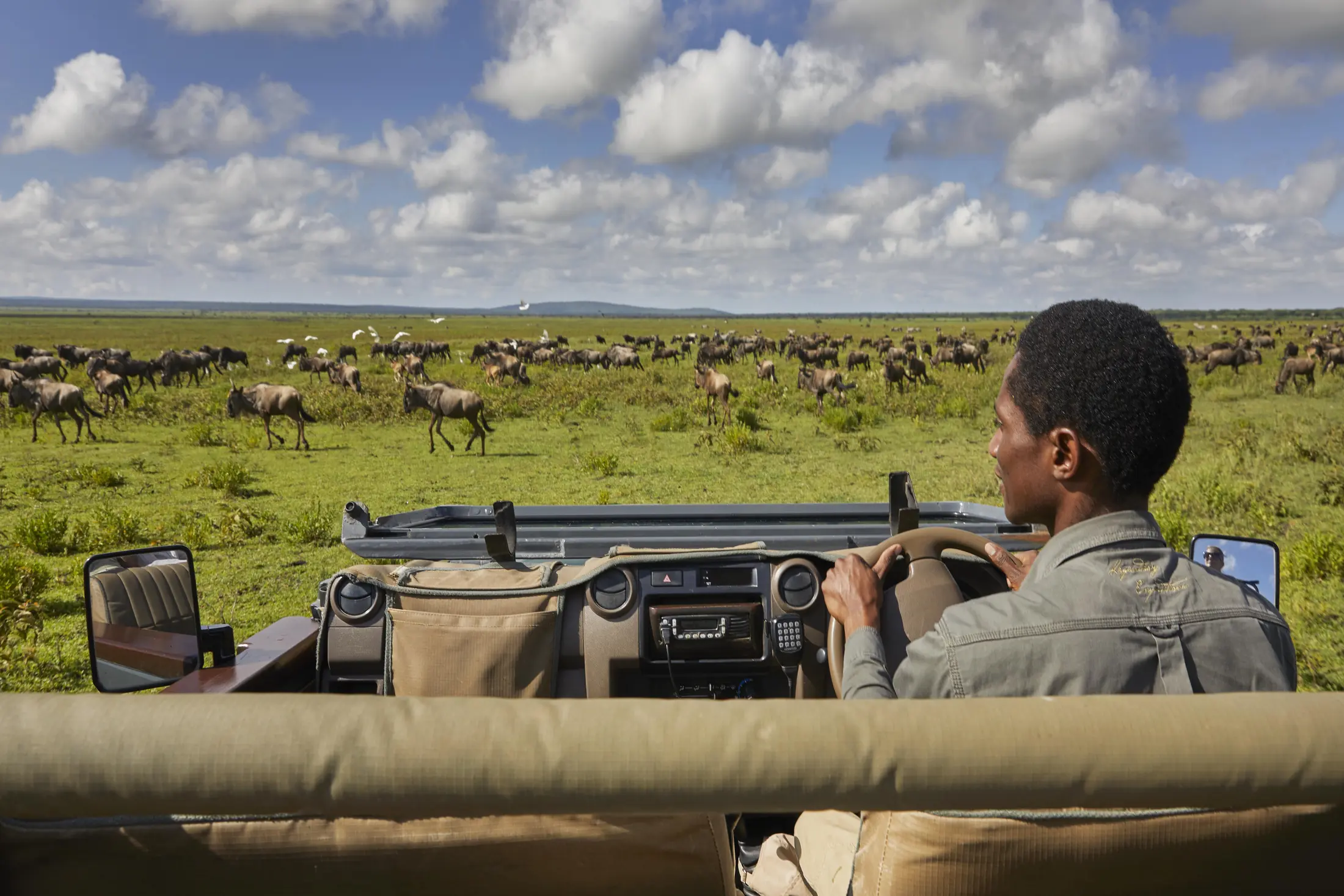
Patient guiding, a private vehicle and enough nights are more valuable than an overconfident guarantee.
04
Camp location matters within a region
The word Serengeti covers immense distances. A beautiful permanent lodge can be wrong for a seasonal priority, while a mobile camp may trade facilities for position. In the Mara, reserve and conservancy access also affects rules and travel time.
Compare camp coordinates, airstrip access, likely wildlife focus and the rest of the route, not just brand name.
05
Design a complete safari
Include habitat and guiding you would value even if the headline moment does not occur. Three or four nights in the relevant region, combined with another contrasting area, usually creates a more satisfying journey than a hurried attempt.
Questions travellers ask
Useful answers, before you decide.
What is the best month for a river crossing?
There is a broad seasonal window rather than a guaranteed month. Herd movement and crossing behaviour respond to rainfall and grazing, and vary year to year.
Is Tanzania or Kenya better?
Both are part of the same ecosystem. Tanzania covers more of the annual cycle; Kenya can be exceptional when herds are in the Mara. Dates and safari style should decide.
How many nights should I allow?
At least three in the relevant area is a useful starting point; four or more can reward photographers and travellers for whom migration is central.
Will a mobile camp be comfortable?
Many are highly comfortable, but the emphasis is location and immersion. Facilities, power, bathroom design and accessibility differ and should be checked individually.