
The short answer
What to know first.
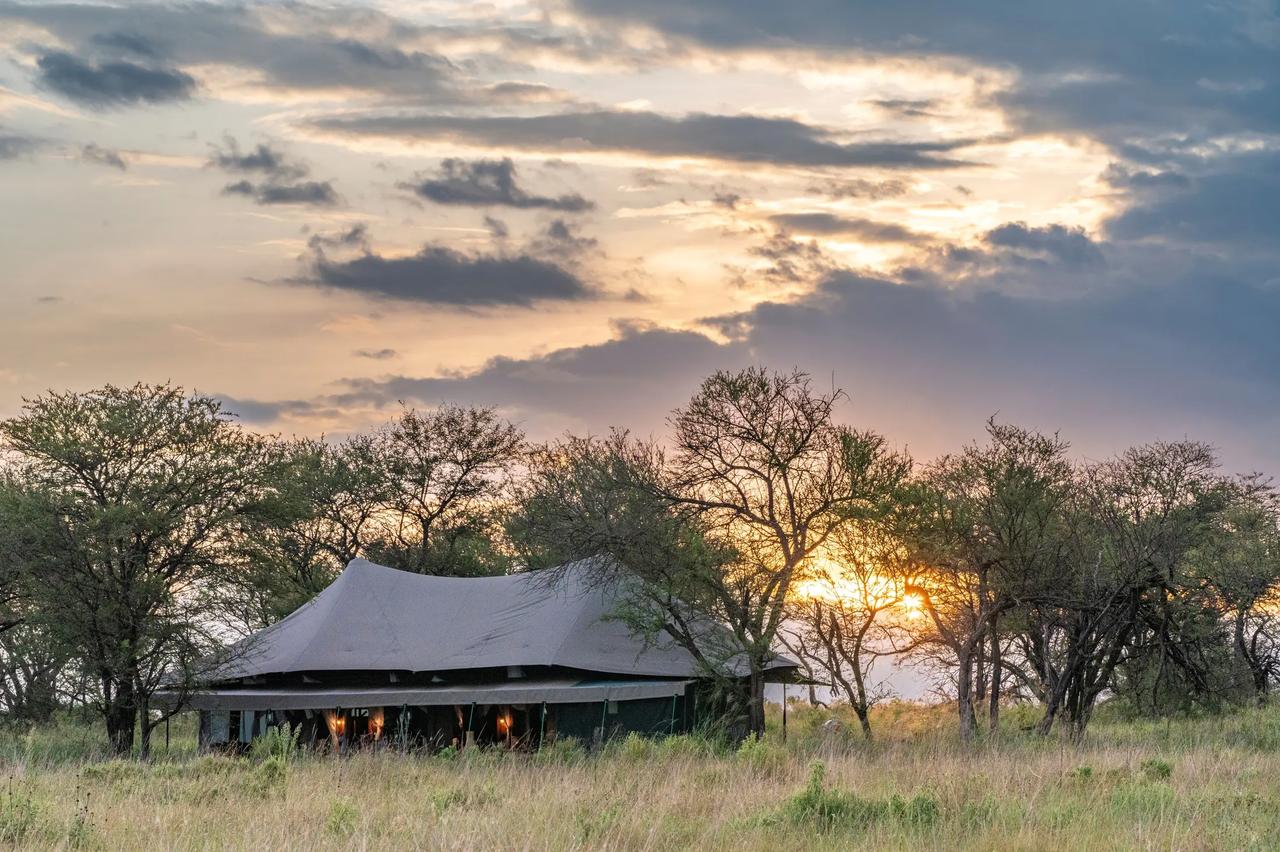
Two weeks is the honeymoon's natural length and the savannah its natural theatre, and the design that makes both true is an arc, not an itinerary: arrive exhausted, finish restored, with the wildest drama placed where your energy will actually meet it. The shape our honeymoon desk builds by default: a gentle landing of one or two nights near the gateway, because wedding recovery is real and the first days are for sleep and each other rather than dawn drives; then the savannah chapter at its deepest, six to eight nights across one great ecosystem, two camps in contrasting registers per the split-file logic, private vehicle for the reasons the romance pages give; then the transfer day counted honestly; then the coast as the long exhale, four to six nights by the split models the beach pages price, Zanzibar, Lamu or Diani chosen by the coast-decision method. The surprise mechanics deserve their own line because camps do them superbly when briefed early and clumsily when sprung late: the private dinner in the clearing, the drawn bath under stars, the empty-deck sundowner, all logistics wearing candlelight, arranged invisibly through the file so neither of you is the event's producer. And the forest question answered plainly: add the gorillas when both of you genuinely want the trek, a magnificent third act for expedition-hearted couples that our gorilla-honeymoon pages design in full, and never as a surprise, because a five-hour forest climb is a gift only when it was asked for. Dates, camps and current terms confirmed at booking.
At a glance
The planning brief.
Design the rest-arc
Arrive tired, finish restored: a gentle landing, the safari crescendo mid-trip, and the coast as the long exhale.
One great savannah, one coast
Two chapters done deeply beat four done breathlessly: the split models our coast pages price.
Surprise mechanics
Camps do romance well when briefed early: the private dinner, the drawn bath, the empty-deck sundowner, arranged invisibly.
When to add the forest
Gorillas turn a honeymoon into an expedition: add them when both of you want the trek, never as a surprise.
01
The rest-arc, engineered
Weddings end in a particular exhaustion, and the honeymoon that ignores it spends its first safari days asleep in the vehicle. The arc begins with a soft landing: a gateway night or two, late breakfasts, a pool, no alarm, the recovery our Nairobi-night and gateway pages give every traveller, doubled in importance here. The safari crescendo belongs to the fortnight's middle, days four through ten, when energy has returned and wonder has room.
The exhale completes it: the coast chapter placed last on purpose, so the journey's final memories are barefoot rather than buckled in, and the return flight leaves from beach-rest rather than bush-adrenaline. The arc sounds obvious written down; it is violated by most package honeymoons, which front-load the spectacle onto the tiredest days and end on the longest travel, which is how magnificent trips get remembered as gruelling.
The arc also settles the season question honestly: couples marrying in the European summer meet the crossing window's horizons, which our booking pages say must be reserved a year out, while shoulder-season weddings inherit the green months' privacy and kind rates. Neither is better; the design simply starts from the wedding date and works outward, which is one more reason the honeymoon file rewards early conversation more than any other.
02
One great savannah, held properly
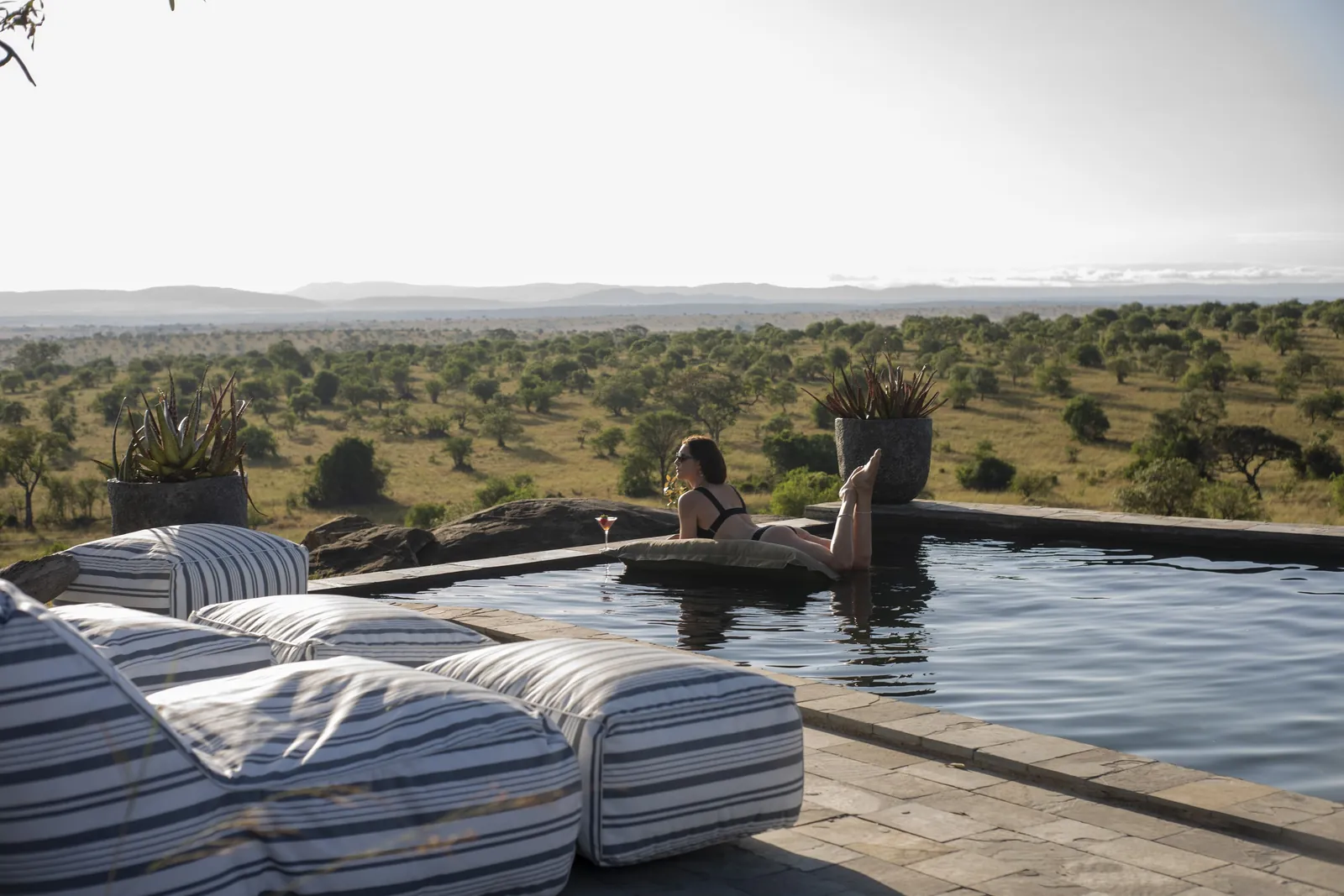
The fortnight funds one ecosystem done deeply, not a country-collecting sprint: six to eight savannah nights across two camps in contrasting registers, a sociable classic and a couples-quiet exclusive, or canvas romance paired with a permanent house, chosen by the character method the camp pages teach. The private vehicle earns its line here more than anywhere, the earlier pages' arguments, your schedule, your silence, compounded by the fact that this trip is explicitly about the two of you.
Season steers the choice: crossing months for drama-hearted couples who booked on the long horizons, the green season for privacy, light and the soft rates that fund an upgrade, the quiet dry months for the connoisseur's balance. The comparison and seasonal pages carry those decisions; the honeymoon layer simply weights privacy more heavily than any other file type, which nudges conservancies, private grounds and the camps our notes flag as couples-built.
Nights one to two
The soft landing: a gateway house, late breakfasts, no alarms. Wedding recovery is a design input.
Nights three to nine
The savannah crescendo: two camps, contrasting registers, private vehicle, the set-piece surprises spaced.
The transfer day
Counted honestly as travel, per the split models: a flight, a change of key, and nothing promised of it.
Nights ten to fourteen
The exhale: coast or forest by temperament, chosen together, with the final morning unhurried by design.
03
Surprise mechanics, done properly
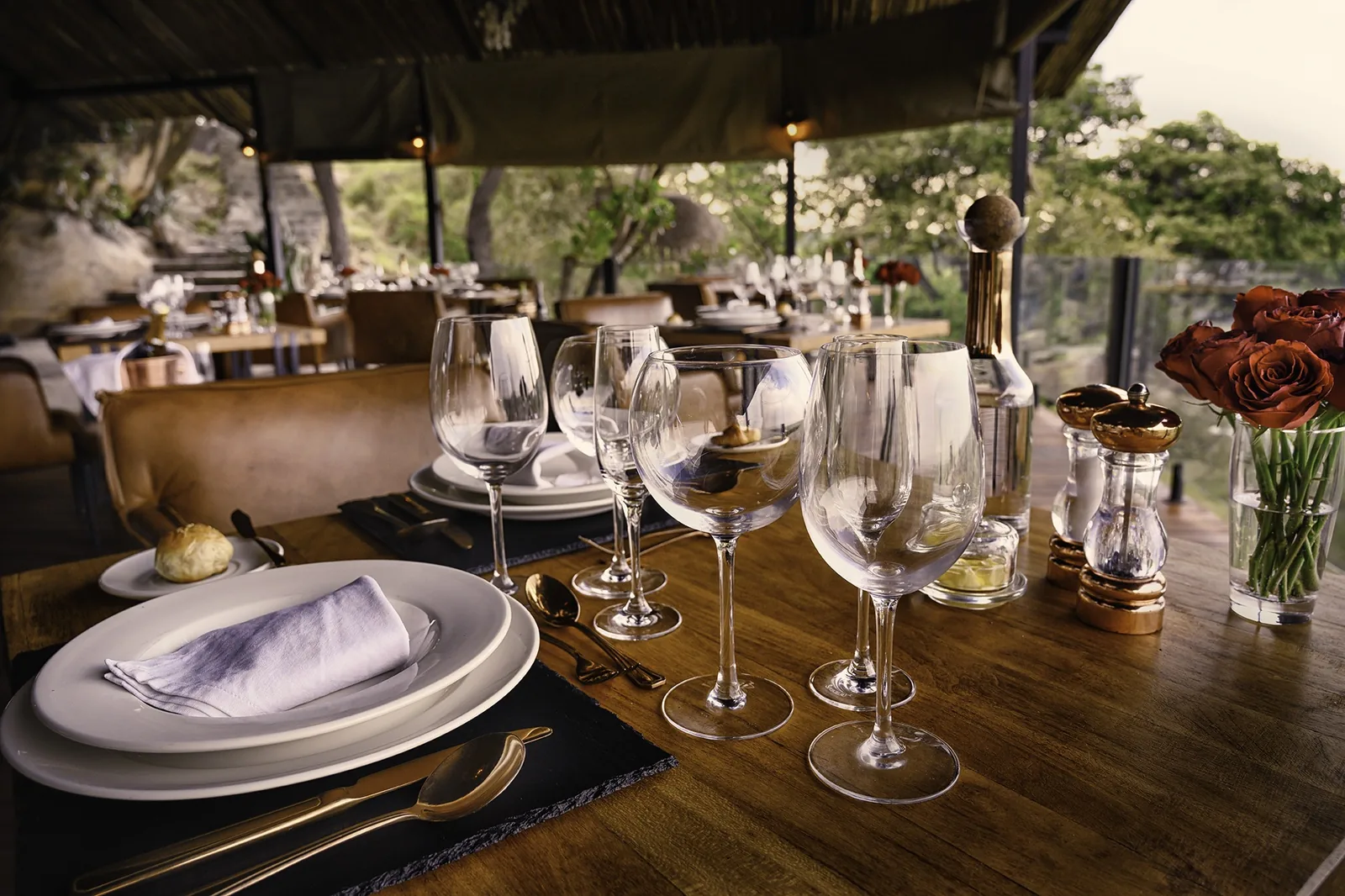
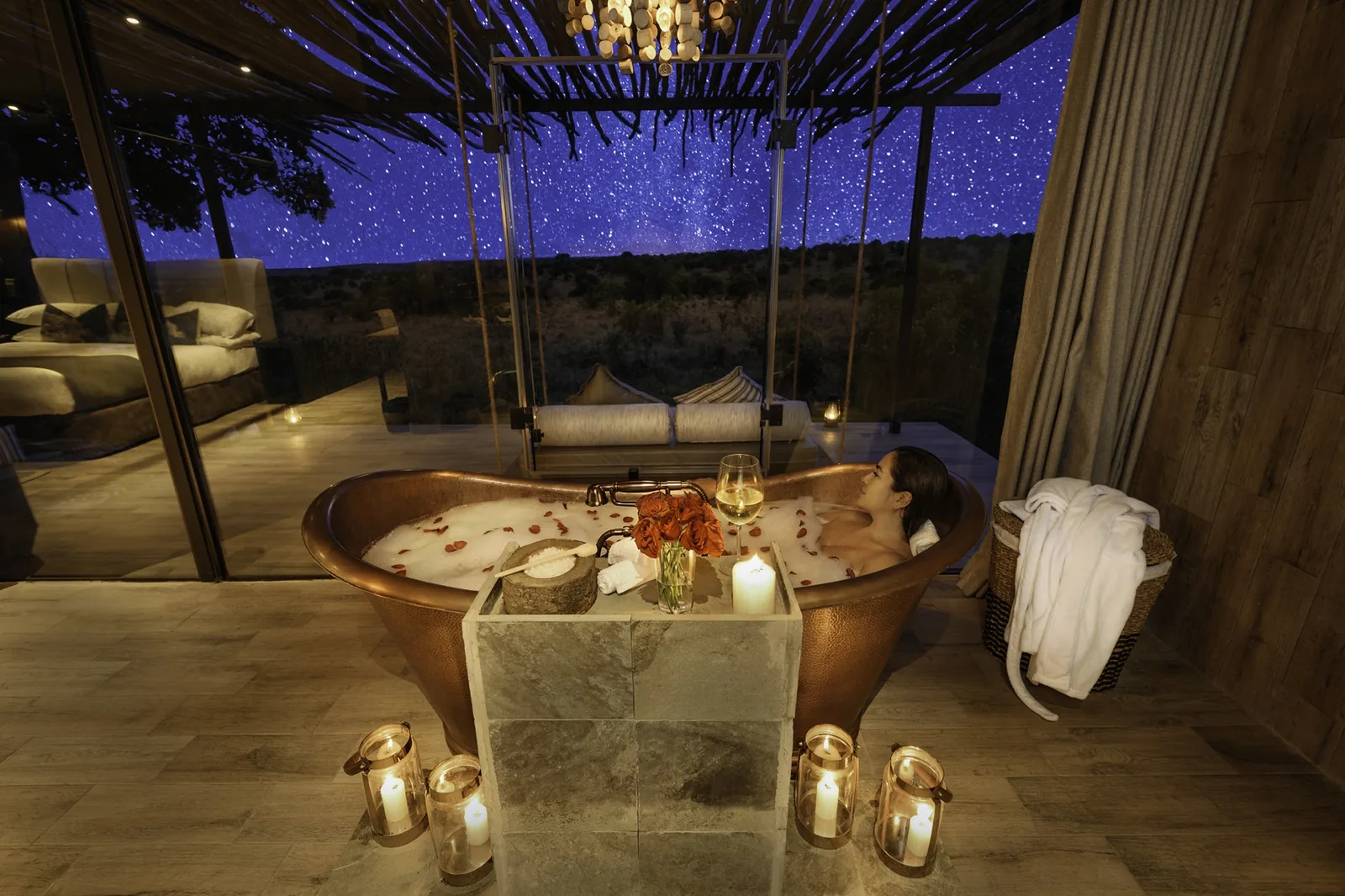
Camps are magnificent producers of romance when given a script and notice: the clearing dinner with lanterns and a fire, the bath drawn and candlelit for the return from the drive, the sundowner deck cleared of everyone but you, the small anniversary cake that appears without a word. All of it is logistics, briefed through the file weeks ahead, timed to the day's rhythm, and executed so neither of you sees the machinery.
The craft rules: two or three set-pieces across a fortnight beat one per night, which turns wonder into schedule, per the honeymoon pages' over-programming warning; surprises should bend to weather without drama, which is why they are camp-run rather than guest-smuggled; and the desk keeps the register of what has been arranged so the proposal-dinner and the plain-Tuesday-dinner never collide. Tell us what romance means to the two of you, the planning pages' oldest question, and the mechanics disappear into the days.
04
The coast, the forest, and the fortnight's shape
The coast chapter follows the split models the beach pages price: four nights minimum after the transfer day, six when the fortnight leans restful, on the coast the decision page matches to you, Zanzibar's island menu, Lamu's living culture, Diani's frictionless sand. Honeymoons weight the coast's privacy registers, the villa-and-barefoot properties our notes flag, and the arc's logic holds: the sea is the exhale, so it comes last.
The forest is the fortnight's boldest option: two to three gorilla nights replacing coast nights for couples whose shared idea of romance is an expedition, the full design our gorilla-honeymoon franchise carries. The rule is consent, not surprise, and the reward, for the right two people, is the honeymoon story nobody else at any dinner party will ever match. From the Sail operations desk, checked August 2026: the savannah honeymoon files split almost evenly between coast-enders and forest-enders, their satisfaction is indistinguishable, and both cohorts report the same discovery, that the fortnight's best hours were the unscheduled ones the arc protected.
Questions travellers ask
Useful answers, before you decide.
How many safari nights should a two-week honeymoon have?
Six to eight, across two camps in one great ecosystem, placed mid-fortnight where the energy is: the rest-arc does the rest. The remainder splits between a soft landing and the coast exhale.
Safari first or beach first on a honeymoon?
Safari first, almost always: the arc should end in barefoot rest, not bush adrenaline, and the return flight is kinder from the coast. A gentle gateway landing precedes both.
How do camps handle honeymoon surprises?
Beautifully, when briefed weeks ahead through the file: private dinners, drawn baths, cleared decks, all camp-run so weather can bend them without drama. Two or three set-pieces beat nightly production.
Should we add gorilla trekking to a honeymoon?
When both of you want the trek, wholeheartedly: it is a magnificent third act with its own design pages. Never as a surprise; a forest climb is a gift only when it was asked for.