
The short answer
What to know first.
The private-guide question is product literacy the brochures blur, so here is the plain version. Every good camp already includes professional guiding: resident teams who know their own ground, its leopards' trees and lions' politics, better than any visitor ever will, which is why a single-camp file or a first safari rarely needs more. What a dedicated private guide adds is continuity across a route: one professional who joins you for the whole journey, learns your eye, your pace, your questions and your jokes, briefs each camp's resident team on all of it, and compounds that knowledge camp after camp until, by the second week, they are finding what you did not know you wanted. The craft difference is real and specific: route memory that recalls Tuesday's unfinished leopard story on Friday's ground, sighting patience calibrated to you rather than to a vehicle's average, photographic briefing that carries between parks, and, for families, a consistent adult the children adopt. The price is equally plain: a dedicated specialist guide runs around 100 US dollars per day at current Sail rates, plus the guide's logistics, stated as its own line on the quote, with vehicle continuity where geography allows and seamless handovers where borders and flight networks interrupt it, the four-country choreography that is this desk's particular craft. Worth it for long multi-camp routes, photographers, returners and family files; honestly unnecessary for short single-camp stays, where the resident team is the better answer at no supplement at all. Confirmed at booking.
At a glance
The planning brief.
What a dedicated guide adds
Continuity: one professional who learns your eye, your pace and your questions, across every camp on the route.
When camp guides suffice
Single-camp files and first safaris: the resident teams know their ground better than anyone arriving with you.
The craft difference
Route memory, sighting patience and briefing depth compound over days; by the second week the guide is finding what you did not know you wanted.
The honest price
A dedicated specialist guide prices around 100 US dollars per day at current Sail rates, plus logistics, stated as its own line.
01
What the camp teams already give you
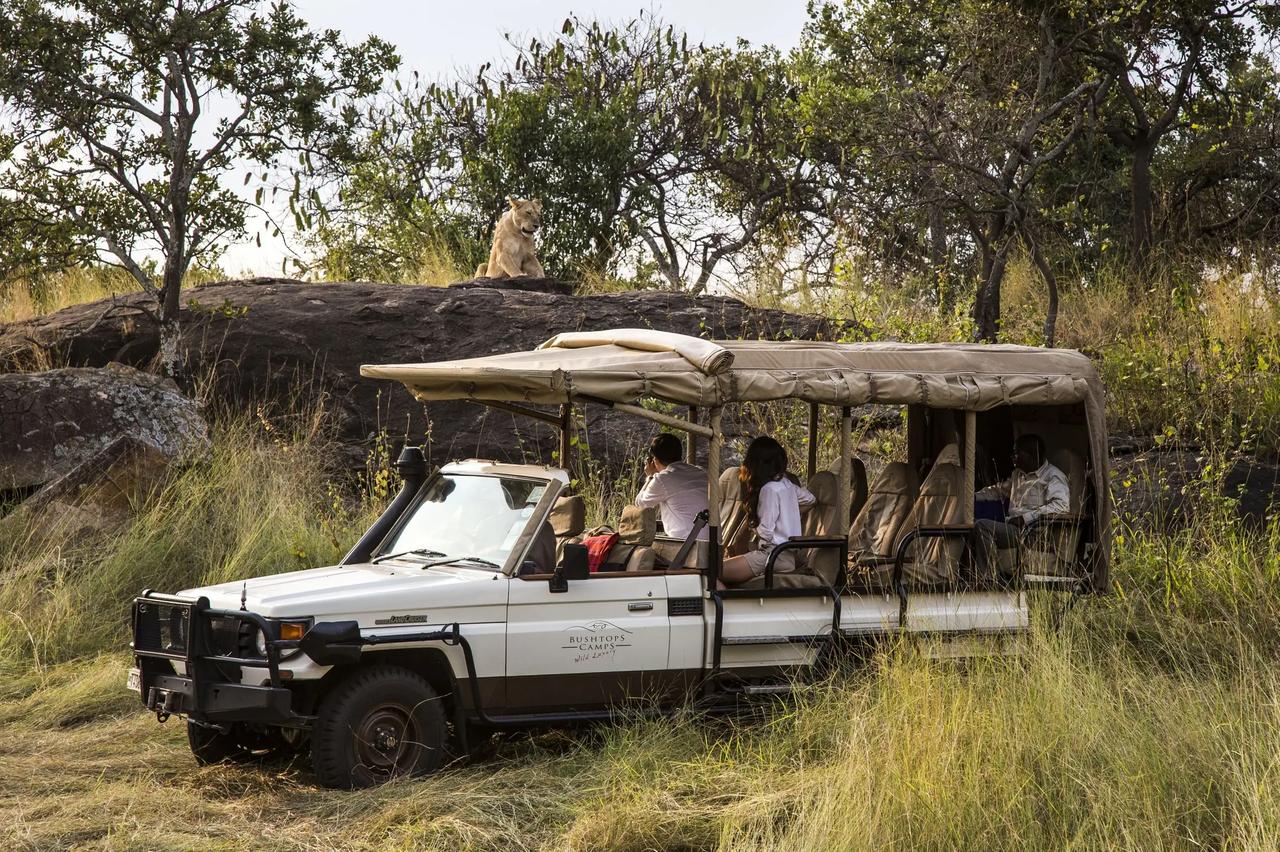
Start with the baseline, because it is high: the resident guide at a good camp is a local-ground specialist, versed in exactly where its leopards hunt, which crossings its river runs, and how yesterday's rain moved this morning's game, knowledge no travelling guide can match on arrival. Camp guiding is included, rotates fresh eyes through your days, and at the small owner-run camps our notes favour, it is often the establishment's whole reputation.
This is why the honest brief says single-camp files need nothing more: the resident team plus the private-vehicle question our earlier pages settle covers a three-night stay completely. The private guide is not an upgrade to camp guiding; it is a different instrument, and its value begins precisely where a route begins to move.
A note on titles, because the market blurs them: driver-guide, private guide and specialist guide describe different depths of the same profession, and certification systems differ by country, Kenya's gold and silver gradings being the best known. What the quote should always state is the actual person's name, grading and specialism once matched, because the title is a category and the safari is a fortnight with an individual.
02
What continuity actually compounds
A route with three camps meets three excellent strangers; a route with a dedicated guide meets one deepening friendship plus three excellent local briefings, arranged guide-to-guide in a professional shorthand guests never see. The dedicated guide carries your story between grounds: the unfinished cheetah hunt, the birding list, the light you like, the pace your knees prefer, the joke from the airstrip. Nothing needs re-explaining, and the days stop resetting to zero.
The specialisms sharpen it further: a photographic guide who thinks in angle and glass across every park, per our photographic-design page; a birding specialist who turns transfer drives into the trip's secret highlight; a family guide who becomes the children's hero and the parents' relief. From the Sail operations desk, checked August 2026: the request that follows a private-guide file is almost never for a camp again, it is for the guide, by name, which tells you what was actually purchased.
03
The mechanics and the money
The structure is simple and stated: the dedicated guide joins at arrival or the first bush leg, travels with the file throughout, and works alongside each camp's resident team rather than replacing it, two layers of expertise instead of one. Vehicle continuity follows geography: one cruiser can run an overland circuit end to end, while fly-in routes hand the guide between airstrips and borders hand them between registered vehicles, the handovers choreographed so the guest experience never blinks, which across four countries is precisely the desk work our multi-country pages describe.
The money is one honest line: around 100 US dollars per day at current Sail rates for the dedicated specialist, plus the guide's own travel, accommodation and park logistics, itemised rather than buried. Against a route's total it is a modest line with outsized leverage, and against its alternative uses, roughly a third of a night at a fine camp per day, it is a genuine choice our quotes price side by side rather than assume.
Take the private guide when
The route runs three camps or more, a specialism leads (photography, birding, family), or continuity itself is the comfort.
The camp teams suffice when
The file is single-camp or short: resident ground knowledge at no supplement is the better instrument.
The price, plainly
Around 100 US dollars per day at current Sail rates plus logistics, its own visible line, priced against its alternatives.
Across borders
Guides and vehicles hand over at borders and flight networks by design: the four-country choreography is the desk's craft.
04
Choosing the person, not just the product
A dedicated guide is a fortnight of close company, so the match matters as much as the credential: languages, temperament, specialism, energy, and the intangible of whether you would happily share a breakfast silence. The desk matches from a known bench, guides whose files we have run for years, whose reviews we hold, and whose specialisms are proven rather than listed, and we brief the match both ways before anyone commits.
The relationship outlasts the trip more often than any other part of a safari: returners rebook people, not places, as our second-safari page observes, and the guide who learned your eye once starts the next journey already fluent. That is the private guide's quiet economics: the day rate buys this trip's depth, and the continuity buys every future trip a head start, which is why our longest-standing guests treat the line as the least negotiable one on the quote.
Questions travellers ask
Useful answers, before you decide.
Is a private guide worth it on safari?
On multi-camp routes, for specialisms, and for families: the continuity compounds daily and the request that follows is for the guide by name. On short single-camp stays, the resident teams are the better answer.
How much does a private safari guide cost?
Around 100 US dollars per day at current Sail rates for a dedicated specialist, plus the guide's logistics, stated as its own line and priced against its alternatives on the quote.
Does a private guide replace the camp guides?
No: they work alongside the resident teams, adding continuity to local depth, two layers of expertise rather than one. The camps' knowledge of their own ground stays central.
Can one guide cover Kenya and Tanzania on one trip?
Guides and vehicles hand over at borders and flight networks under each country's rules; the choreography keeps the experience seamless, and the four-country desk runs it as standard.